










You always open this closet holding your breath, and today, the towels aren't the only thing that falls. Sheets go next: first fitted, then flats, then the 3 mismatched pillowcases that you don't remember buying.
Suddenly, there's a rain of extra toilet paper rolls from a shadowy place way back on the shelf that nobody has actually seen since the Clinton administration. You may need a ladder and a prayer meeting to put them back.
Mom's seen this show before. Dad tries to help, folds a fitted sheet into a confused taco, and gets banished to laundry duty for life.
This is not a discipline problem. Not a folding problem. You really try to straighten it up every time you put the laundry away. You just have a closet in the hallway with shelves that were never designed for what you need them to do.
Laundry day shouldn't be an adventure. It should end with clean towels and sheets landing exactly where they belong, in a space actually built to hold them.
Why Do Most Linen Closets Never Have Enough Space?

Most linen closets aren't actually short on room. They're stuck with builder shelving that was never designed around what you own, one fixed layout of four or five evenly spaced shelves, 14 to 18 inches deep, installed once and never touched again. That's especially true in California homes built between the 1970s and 2000s.
We've been designing and installing custom closet systems out of our California facilities since 1991, and here's what we see over and over: two structural issues quietly eat up space that's already there.
- Shelves are too deep for what sits on them, so folded items slide into the dead zone at the back and get restacked wrong just to see what's back there.
- Shelf spacing is fixed, so a folded duvet either doesn't fit at all or eats two shelves' worth of height it never needed.
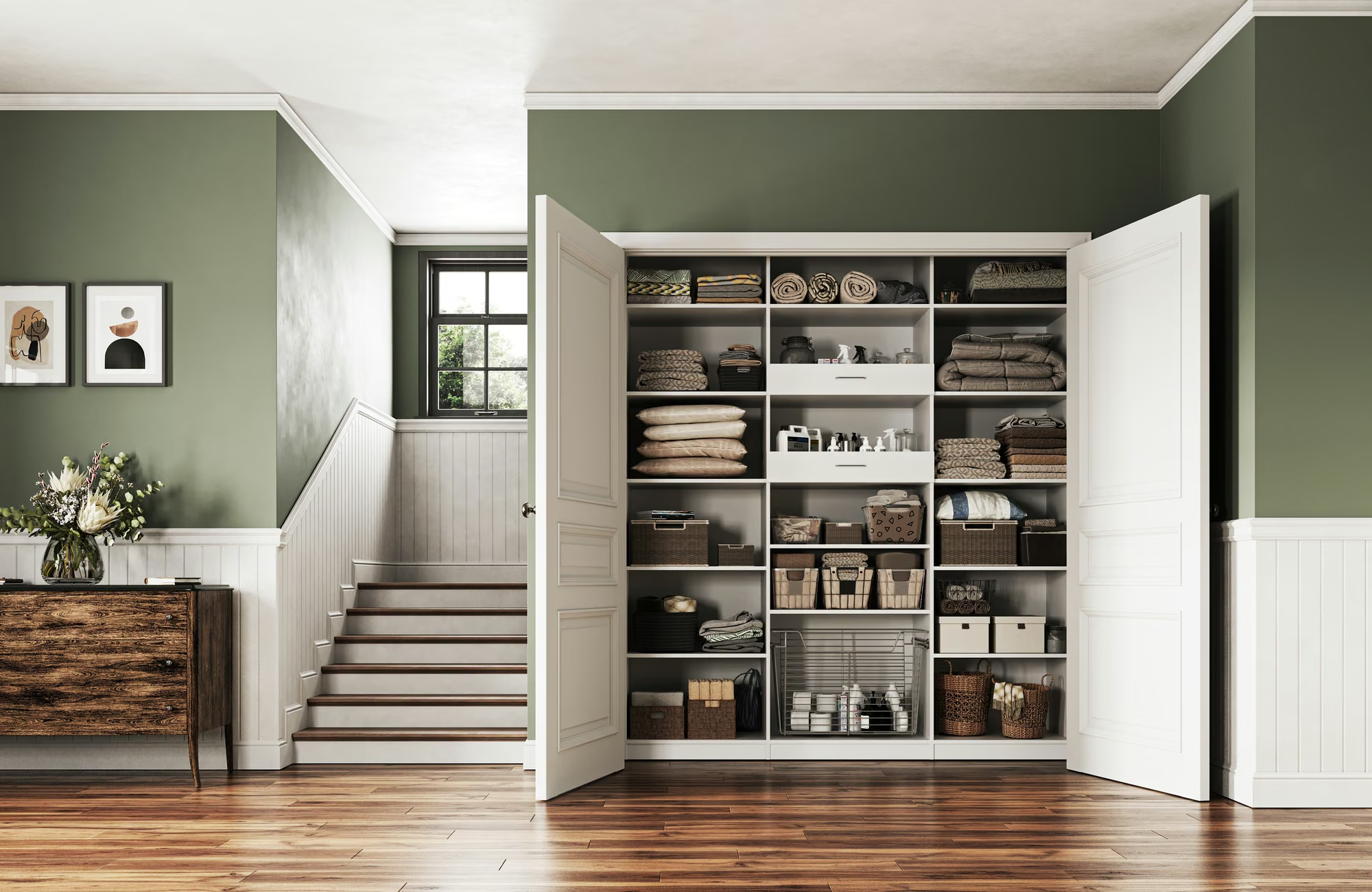
It doesn't get solved by a cute new set of bins. It gets solved by making the space itself work harder: pull-out bins or baskets, drawers with dividers, slide-out shelves spaced for what you own. Deeper where you need it, shallower where you don't. That's the difference between a passive linen closet that "will do" and a custom linen closet system that actively works to keep you organized.
Professional organizers, including many NAPO-certified pros, will tell you the same thing: the secret is to sort by function before you buy a single bin or basket.
How to Organize a Linen Closet in Four Zones
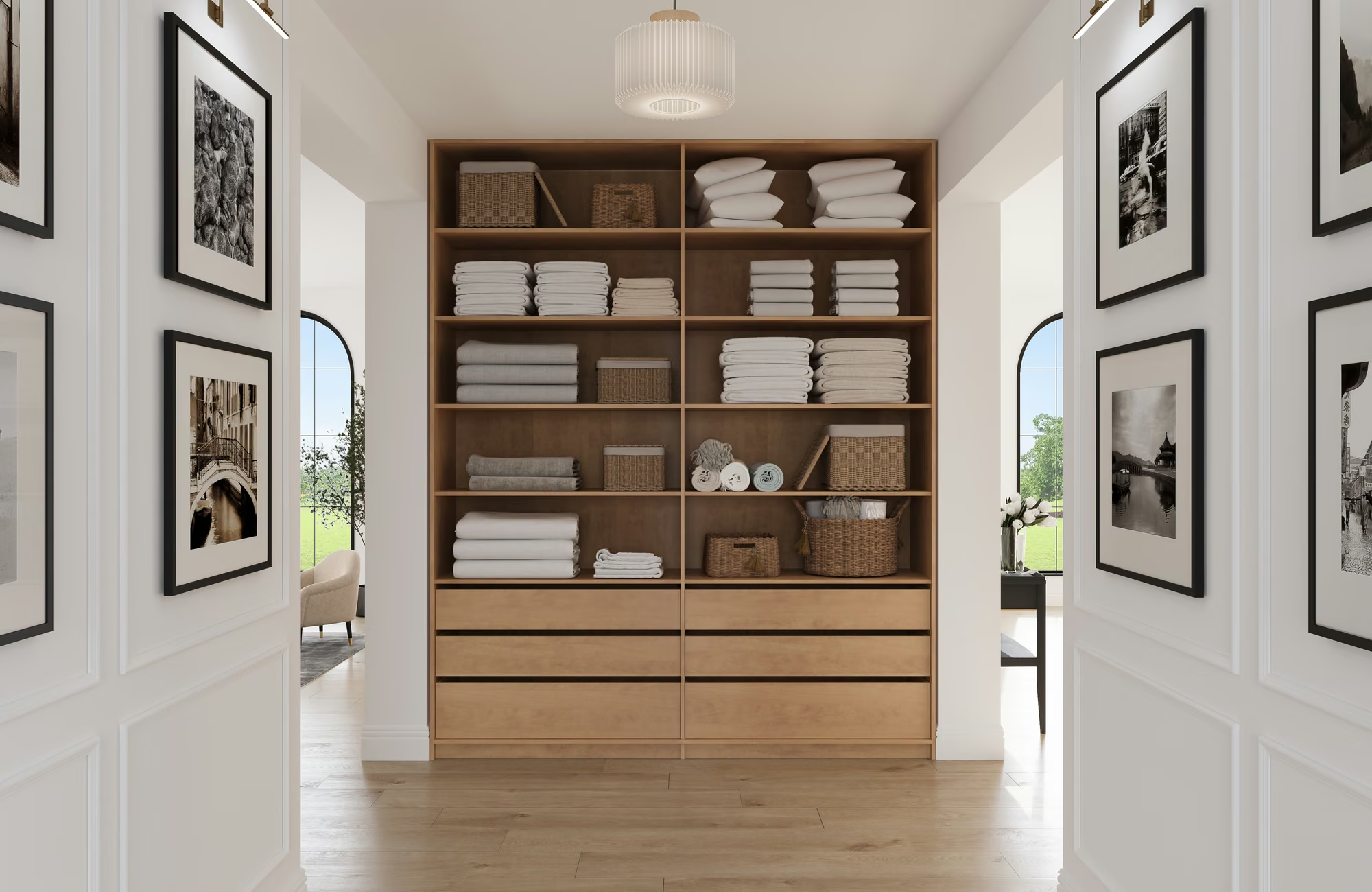
Before you touch a bin, sort what you own into four zones based on how often you reach for it, not by color, fabric, or "matching set." Figure out what earns a spot at eye level before you decide how much room it gets.
Zone 1: Daily Towels
Bath towels, hand towels, and washcloths belong at eye level to waist height (the zone you can grab one-handed while holding a toddler or a coffee mug). Fold towels in thirds lengthwise, then in half, so the finished edge faces out. It's a small habit, but it's the difference between a shelf that still looks folded midweek and one that's a heap by Thursday.
Zone 2: Bedding by Bedroom
Group each full sheet set together (fitted sheet, flat sheet, both pillowcases) and store the stack inside one of its own pillowcases, a trick Good Housekeeping and Martha Stewart's team both recommend since it turns four loose pieces into one grab-and-go bundle (genuinely useful for anyone who has never once managed to fold a fitted sheet into something that lies flat). Label shelves by bedroom, not by size; a "queen" label doesn't help when three bedrooms all have queen beds.
Zone 3: Guest Linens
Guest sheets and towels get their own shelf, separate from daily-use items, so you're not digging through your own towels to find the good ones when someone's staying over.
Zone 4: Overflow Supplies
Out-of-season bedding, spare blankets, holiday tablecloths: the "nice to have nearby, fine if it's a reach" zone. Top shelf or lower bin, either works, since these don't need daily access.
Linen Closet Organization Ideas for Specific Problems
Why Do Things Always Fall to the Back of a Deep Shelf?
A standard linen closet shelf runs 14 to 18 inches deep, but a folded stack of towels is usually only 8 to 10 inches deep, which is exactly why things disappear at the back. That's 4 to 8 inches of unused space on every shelf, a dead zone where things get pushed and forgotten. Pull-out bins on drawer runners bring that back space forward instead of making you reach in blind. A custom system typically splits one deep shelf into two shallower tiers, or swaps it for a real pull-out drawer: a bigger move than a $12 bin, but the one that actually turns wasted depth into usable space for good.
Fixed Spacing
Builder shelving is usually fixed around 12 inches apart, but a folded duvet needs closer to 14 to 16 inches, so it either doesn't fit or gets crammed in sideways and called organized. Adjustable shelving on a track system lets you reposition shelves in roughly 1-inch increments, so you're using the height you already have instead of losing inches to wasted air above short stacks. This matters even more in a tight footprint; our guide on how to organize a small closet covers the same adjustable-shelving logic in a much smaller box.
Double-Duty Closets
In a lot of California apartments and condos, that one closet handles bedding, toiletry overflow, and backup medicine storage because the bathroom cabinet ran out of room years ago. Carve out a clearly separate sub-zone with its own adjustable shelf or bin for toiletries and medicine, ideally out of easy reach for kids, so the linen zones stay linen zones instead of turning into a junk drawer with doors.
When a Shelf System Isn't Enough
Bins, tension rods, and stackable cubes can genuinely help, until the shelf underneath is still the wrong depth or spacing, and you're back to the same pile six weeks later.
What's the fastest fix for a small or awkward linen closet?

Combine daily towels and bedding into two zones instead of four, and prioritize adjustable, shallower shelving over adding more bins. Depth is almost always the real constraint in a tight closet.
If your linen closet still fights you after a genuine reorganization attempt, the shelf itself is probably the problem, and that's worth fixing once, correctly. Closet World designs and manufactures adjustable custom linen closets in California, built around your actual measurements and what you actually own instead of a generic builder template.
At Closet World, that's our whole mission: maximize the space you already have. If the chaos doesn't stop at the linen closet, our broader roundup of closet organization ideas is a good next stop.
Book your FREE in-home design consultation and find out exactly what your shelves need. No pressure, just measurements and a plan. Nobody here needs to know what's actually inside that box that's been sitting on your top shelf since the move, they'll just build a shelf shaped to hold it.