




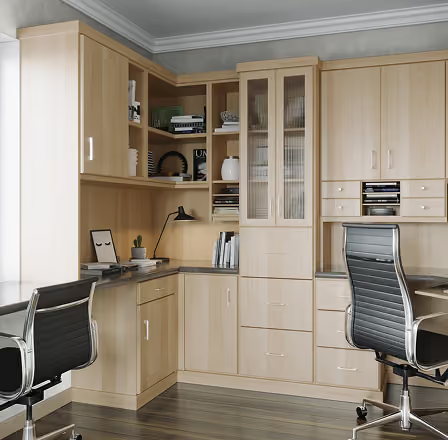







Federal time-use data shows that putting things away and keeping a household organized takes real time every day, and women are nearly twice as likely as men to do it. Professional organizers say a set home for every item, a short daily reset and storage built around the routine can cut that time down.
Key Takeaways
- About 6.3% of Americans put household items away on an average day.
- Women are nearly twice as likely as men to do it.
- About 1 in 7 spends roughly 50 minutes a day organizing and planning.
- Household time rises with age, from 43 minutes to 2.7 hours a day.
- A set home for every item makes putting things away faster.
Most of the work of running a home never makes it onto a to-do list. Groceries get unpacked, the mail gets sorted, the laundry gets folded and put somewhere, and the week gets planned around all of it. Federal survey data shows that this quiet, daily upkeep takes real time, and that it does not fall evenly.
On an average day in 2025, 81% of Americans age 15 and older spent some time on household activities, according to the American Time Use Survey, which the U.S. Bureau of Labor Statistics conducts each year. Across everyone, that worked out to about two hours a day.
Closet World, a home storage company based in Southern California, averaged three years of the survey's detailed activity tables, from 2023 through 2025, to look at two categories that rarely get attention: storing household items and household organizing and planning.
Putting things away is a small task with a big gender gap
The survey tracks "storing interior household items, including food" as its own activity. It includes putting away groceries and other belongings around the house. On an average day from 2023 through 2025, about 6.3% of Americans did it, and those who did spent about 22 minutes, according to BLS annual tables.
Professional organizers say the daily version of that task can be short. "Five to ten minutes can restore order and reduce stress," Susie Marsh, a professional organizer and licensed social worker who has been a member of the National Association of Productivity and Organizing Professionals since 2008, wrote on the association's blog in May.
Women were nearly twice as likely as men to do it: About 8.2% of women on an average day, compared with about 4.3% of men.
The same pattern shows up in housework overall. About 48% of women did housework such as cleaning and laundry on an average day over the three years, compared with about 24% of men. Women who did housework spent about an hour and 47 minutes on it, and men who did spent about an hour and 22 minutes.
Men's share has been growing, according to an NBC News analysis of the same survey. "Men are expected to do more. They feel that they should do more," Melissa Milkie, a professor of sociology at the University of Toronto, told NBC News.
Organizing and planning take longer than most people think
A second category, "household and personal organization and planning," covers the mental side of keeping a home running: sorting papers, making lists and scheduling. About 14.6% of Americans did it on an average day from 2023 through 2025, roughly 1 in 7, and they spent about 50 minutes on it.
Women again led. About 17.4% of women spent time on organizing and planning on an average day, compared with about 11.7% of men, and women who did it averaged about 53 minutes to men's 45.
Organizers say that planning time is partly a storage problem. "Every time an item doesn't have a place to go, it becomes taxing on your mental capacity," Ebony Deloatch, a professional organizer and owner of Humble Enhancement, told HGTV.
Age, work and family change the picture
Time spent on household activities rises steadily with age, the BLS reported in its 2025 results. People ages 15 to 19 averaged 43 minutes a day, while those 65 and older averaged 2.7 hours.
The generational picture is lopsided. In a 2026 StorageCafe survey of 1,430 people, 47% of Gen Z respondents and 40% of millennials said clutter stresses them out always or often. Yet younger adults spend the least time on household upkeep.
In the 2025 American Time Use Survey, people ages 20 to 24 averaged 1.37 hours a day on household activities, compared with 1.58 hours for ages 25 to 34, 1.98 hours for ages 35 to 44 and 2.18 hours for ages 45 to 54.
Storage use follows a similar curve. Just 13% of Gen Z respondents currently rent a self-storage unit, compared with 35% of Gen X and 32% of baby boomers, according to StorageCafe, though 32% of Gen Z say they plan to rent one.
Work matters too. Among adults living with children under 18, "those who were not employed spent over an hour more than those who were employed" on household activities, 3.1 hours compared with 1.7 hours, the agency said.
Household type shows up in the numbers as well. In 2025, married people living with a spouse averaged 2.23 hours a day on household activities, compared with 1.76 hours for people of other marital statuses, according to the survey's demographic tables.
What separates a fast routine from a slow one
The survey measures time, not the reasons behind it. Professional organizers point to systems. "An organized home doesn't happen in a day; it's built through smart systems and consistent habits," Stephanie Denson, founder and lead organizer of Spirit & Space, wrote on the official blog of the National Association of Productivity and Organizing Professionals. A well-organized home, she wrote, "saves time, reduces stress, and makes everyday tasks smoother."
"When you have a home for every item, putting things away becomes easy because your space anticipates your needs," Deloatch told HGTV.
Where people keep things is shifting, too. "One of the biggest changes is that a spare bedroom is no longer viewed as storage space," Doug Ressler, business intelligence manager at Yardi Matrix, told StorageCafe.
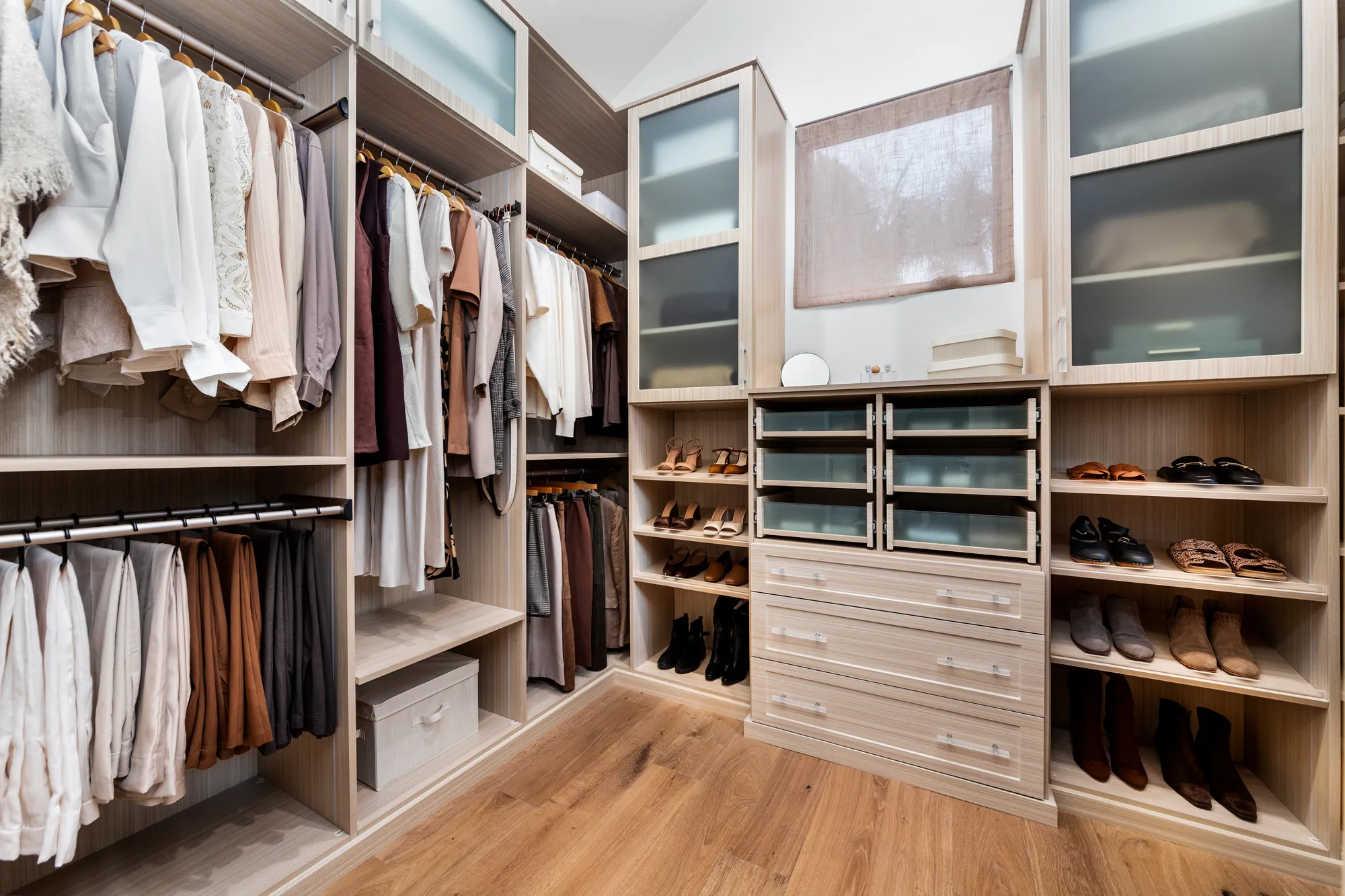
For many people, the bedroom closet is one of the few spaces used every morning and every night, which makes it a common place for small delays to add up. Denson's advice starts there: "If nothing else, ensure that the surface beside your bed is orderly, and that the closet works for you."
Nicole Gabai, a professional organizer and member of the association's Golden Circle, made a similar point about clothing. "Decluttering clothes can make life so much easier when you're getting ready," she wrote in Homes & Gardens.
Small changes that save time
Common organizing advice comes down to a few habits that cut the time it takes to put things away.
Store things where they are used. Items kept near the place they are needed are more likely to be put back.
Give every category one home. A single spot for keys, mail or seasonal clothing removes the daily decision about where something goes.
Make the closet fit the routine. Everyday clothes belong at eye level and arm's reach, with out-of-season items higher or in back. "There's no reason for that to take up prime real estate in our tiny closets," Jen Jeffress, owner of Sort It Out San Diego, told Axios San Diego in January, referring to off-season sweaters and boots.
Plan in one place. A single calendar or list keeps organizing and planning from spreading across the day.
None of these require a big project. The survey suggests the payoff is measured in minutes a day, and minutes a day add up over a year.
About the data
Figures come from the U.S. Bureau of Labor Statistics American Time Use Survey, Table A-1, for 2023, 2024 and 2025. The three-year figures are simple averages of the published annual estimates, calculated by Closet World. The survey covers the civilian, noninstitutional population age 15 and older. "On an average day" percentages reflect the share of people who did an activity on a given day, averaged over all days of the week, not the share who ever do it. Time figures for each activity are averages among the people who did it that day. Age, employment and household figures come from the 2025 release.
This story was produced by Closet World and reviewed and distributed by Stacker.