










In an earthquake, falling and flying objects injure far more people than collapsing buildings do. Ahead of the Great California ShakeOut on Oct. 15, this room-by-room checklist covers what tends to fall, from bookcases and top closet shelves to china cabinets and garage racks, and how to secure each one, mostly with free or low-cost steps.
Key Takeaways
- Falling objects cause most earthquake injuries, not collapsing buildings.
- Los Angeles faces a 60% chance of a magnitude 6.7+ quake within 30 years.
- Anchor tall furniture to studs; keep heavy items on low shelves.
- Start with free fixes, then secure one item a weekend.
- Practice Drop, Cover and Hold On at the Oct. 15 ShakeOut.
At 10:15 a.m. on Oct. 15, millions of people will drop to the floor, take cover under a sturdy table and hold on for one minute. It is the Great California ShakeOut, the state's annual earthquake drill. Last year, more than 10.4 million Californians took part, including more than 5.4 million K-12 students and staff, according to the California Department of Education.
The drill rehearses the first minute of an earthquake. The more useful question for most households comes before that minute: What in this room would fall? ShakeOut organizers put it plainly. In an earthquake, people are "much more likely to be injured by falling or flying objects" than by a collapsing building.
That is what played out in June, when a magnitude 5.6 earthquake struck Mendocino County. At Redwood Valley Market, about seven miles from the epicenter, televisions fell, and workers closed the business to clean debris from the floor, the San Francisco Chronicle reported. At a resort in Ukiah, wine bottles in the gift shop shattered when they hit the ground, and at a liquor store in Willits, a large humidor toppled. "It was really violent," Danielle Sanders, who was pumping gas near the epicenter, told the Chronicle. "The whole place just shook."
Homes took the same jolt. "It shook everything in our house, like stuff everywhere," Ana Sanchez of Willits told ABC7 News. In Kelseyville, about 40 miles from Ukiah, Holly Woods was home with her dogs when the shaking hit. "Stuff flew down. It was very scary," she told KTVU. Daniel Alonzo of Ukiah told KTVU it felt "almost like a freight train was running right through our house."
Most quakes are reminders, not disasters. On Sept. 27, a magnitude 3.6 earthquake struck about 4 miles west-southwest of Hermosa Beach, with no initial reports of damage or injuries, KTLA reported. Southern California records about 10,000 earthquakes a year, but "only several hundred are greater than magnitude 3.0, and only about 15-20 are greater than magnitude 4.0," according to the U.S. Geological Survey's Earthquake Hazards Program.
Small quakes are worth paying attention to. After a magnitude 4.4 earthquake shook Highland Park in 2024, U.S. Geological Survey seismologist Susan Hough said at a press conference covered by Caltech that "any earthquake in California has a one in 20 chance of something bigger following."
That shifts preparation away from predicting earthquakes and toward ordinary things: the bookcase beside the couch, the file boxes on the top closet shelf, the framed print over the bed. Closet World, a home storage company based in Southern California, reviewed guidance from the Earthquake Country Alliance, the public-private partnership behind ShakeOut, along with federal safety data, to build the room-by-room checklist below.
A room-by-room checklist
Living Room & Home Office
Tall Bookcases & Shelving
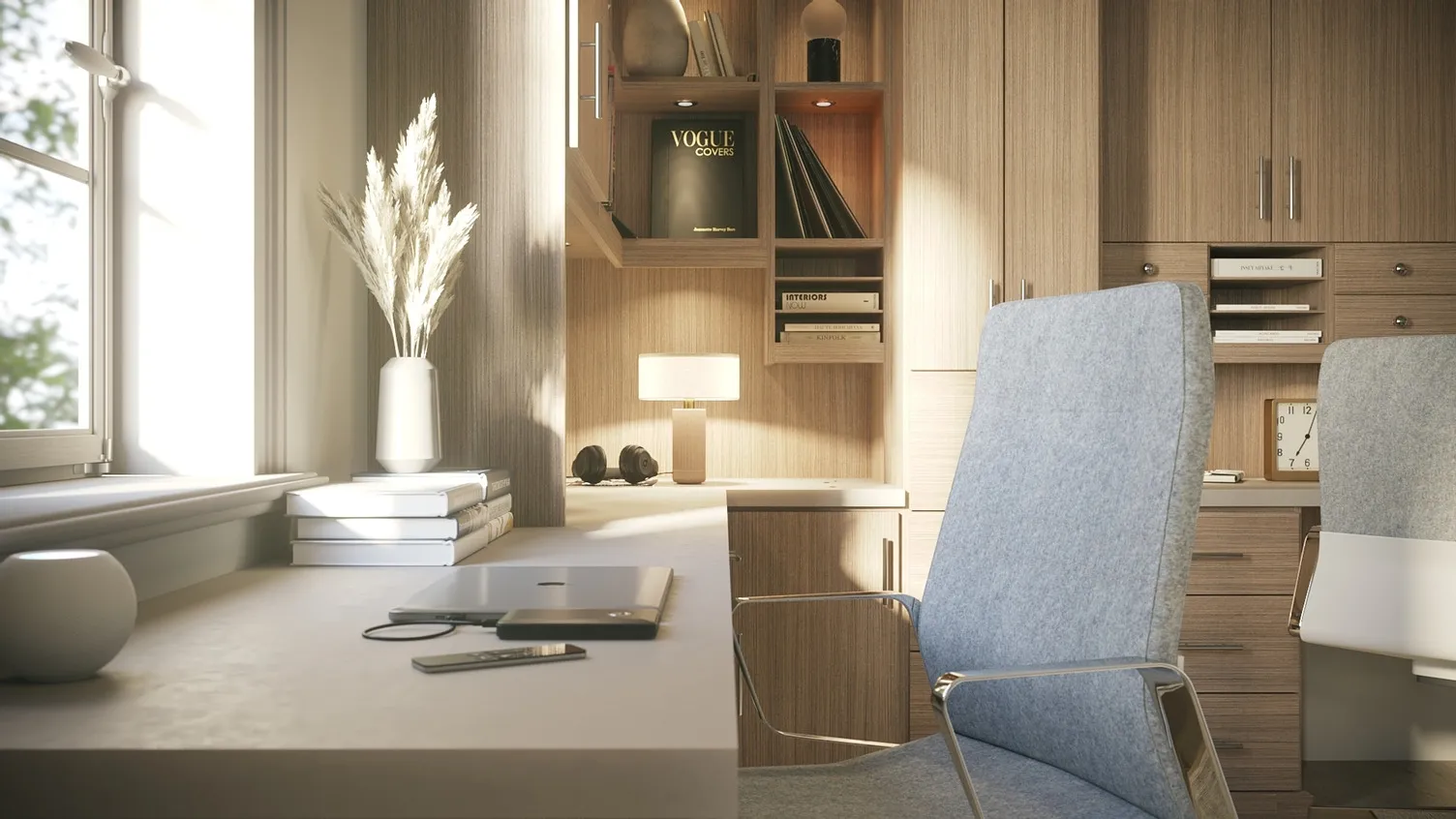
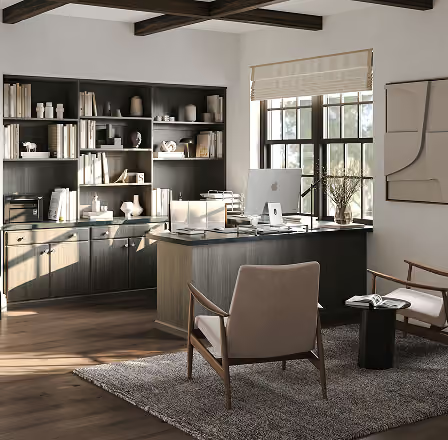
- Anchor top-heavy furniture to wall studs and move bookcases away from places where people sit or sleep, per the Earthquake Country Alliance.
- Put the heaviest books and objects on the lowest shelves.
- Secure TVs and computers with straps, and use museum putty or wax to hold small decorative pieces in place.
Bedroom
What is above the bed?
- Don't hang a heavy, ornate frame over a bed, per Oklahoma State University Extension.
- Do the same with wall shelves, mirrors and anything else that could land on someone sleeping.
- Hang mirrors and pictures on closed hooks so they cannot hop off the wall.
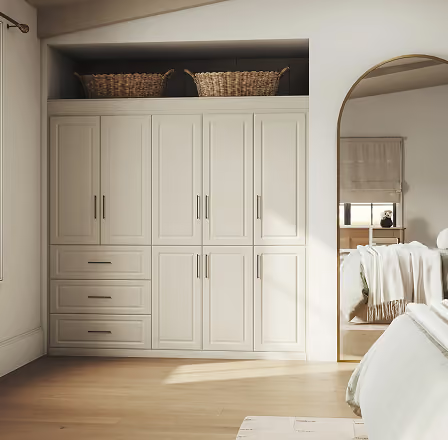
- Anchor tall dressers.
Closets
The Top Shelf
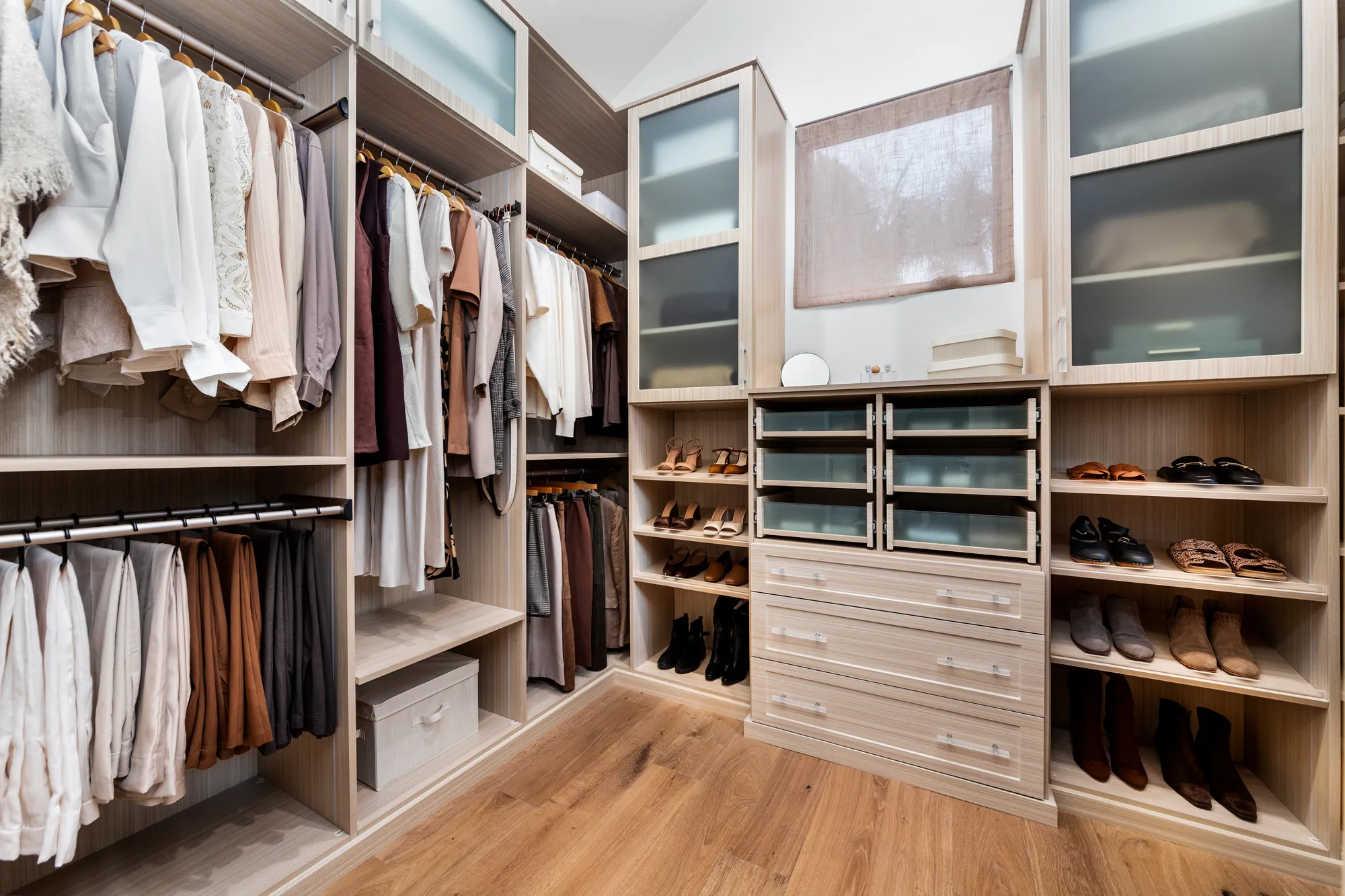
- Bring down the heavy things top shelves tend to collect, like luggage, file boxes, bins of paperwork and spare small appliances, and store them at floor or waist height, per the alliance.
- Keep the top shelf for light, soft things such as linens and out-of-season sweaters.
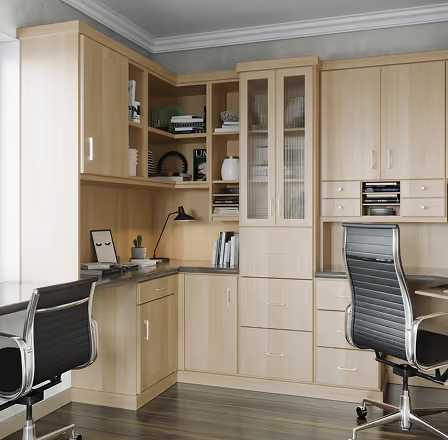
- Anchor freestanding wardrobes and tall shelving units the same way as a bookcase. Shelving fastened into the wall framing is far less likely to tip forward than an unattached unit.
Kitchen & Dining Room
Cabinets & China
- Install latches on kitchen cabinets so doors stay shut and contents stay inside, per the alliance.
- Store heavy pots and small appliances low.
- Anchor glass-front hutches and china cabinets to studs, and add latches to the doors. Closed, latched doors keep dishes contained in a way open shelving cannot.
- Keep the heaviest serving pieces on the bottom shelf, and use museum wax under display plates.
Garage
Shelving & the Water Heater
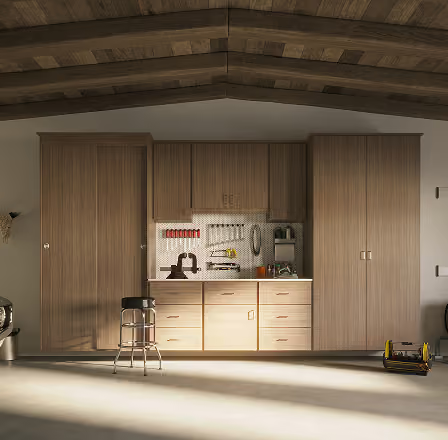
- Use flexible nylon straps or bungee cords to keep storage racks from sliding or tipping, per the alliance.
- Keep heavy bins, from paint cans to tool cases, on the bottom shelves.
- Keep the path to the door clear.
- Secure the water heater to wall studs with two metal straps, and use flexible connections where gas lines meet the water heater and dryer.
Hallways & Entries
The way out.
- Walk the path from each bedroom to the front door.
- Move tall shelves and stacks of boxes away from doors and exit routes, per the alliance.
- Secure overhead light fixtures.
- Keep the hall closet's heavy items off its top shelf.
Start with one thing
None of this has to happen in a single weekend. The alliance suggests starting with the free steps, such as moving heavy items to lower shelves and pulling furniture away from beds, then securing one item each weekend until the list is done. Renters can do most of the free steps without touching a wall and can ask a landlord before installing anchors.
Then, on Oct. 15 at 10:15 a.m., practice the part that happens during the shaking: drop, cover and hold on. "It's the most important thing that people can do to keep themselves safe," Tina Curry, chief deputy director of operations for the California Governor's Office of Emergency Services, told Cal OES News during a past ShakeOut.
ShakeOut organizers advise against two common instincts. Do not run outside, where glass and building pieces can fall, and do not stand in a doorway, which in modern homes is no safer than anywhere else and does not protect against falling objects.
A home where heavy things already sit low and tall things are anchored makes that minute far less dangerous.
How likely is strong shaking where you live?
Most of California is earthquake country. A U.S. Geological Survey hazard model released in 2024 found that nearly 75% of the United States could experience damaging earthquake shaking, with greater potential in the most active parts of California and Alaska.
Regional forecasts give a sense of scale. Within the next 30 years, the USGS puts the chance of a magnitude 6.7 or larger earthquake at 60% for the Los Angeles area and 72% for the San Francisco Bay Area.
After a series of aftershocks rattled the Indio area in January, seismologist Dr. Lucy Jones told ABC7 Los Angeles that "earthquakes trigger very nearby, so if you have a big fault nearby, there's more risk."
The June quake was the strongest in the Redwood Valley-Willits area since 1938, and the USGS estimated that about 80,000 people felt moderate to very strong shaking while about 10 million felt weak to light shaking, according to the Chronicle.
Those numbers describe likelihood over decades, not a forecast for any day or year. Hazard maps estimate how strong shaking could be at a location and how often, based on known faults and past earthquakes. They cannot say when the next earthquake will happen.
Local ground conditions also shape how hard a spot shakes. "What is important is that you know what the ground is like, and what the larger geologic structure is like," U.S. Geological Survey seismologist Elizabeth Cochran told Live Science about new mapping of the Los Angeles Basin.
As the USGS states, "No one can predict earthquakes." What households can control is what is sitting on their shelves when one does.
This story was produced by Closet World and reviewed and distributed by Stacker.