










Key takeaways
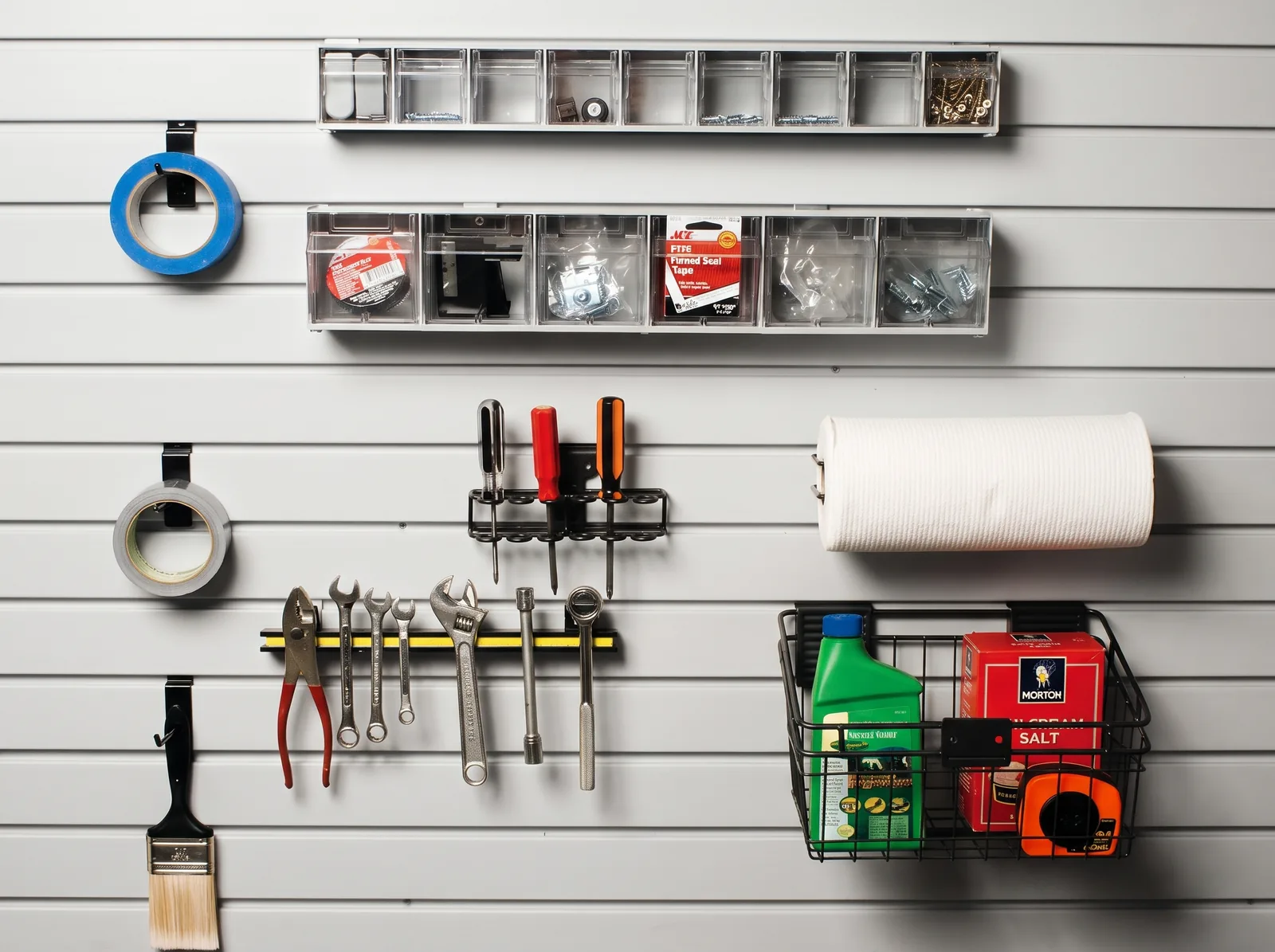
- Slatwall panels: hang anything, anywhere on the wall, and rearrange it in seconds. Best for tools, bikes and gear that changes.
- Rail systems: one horizontal track, hooks slide along it. Best for a short run of heavy items.
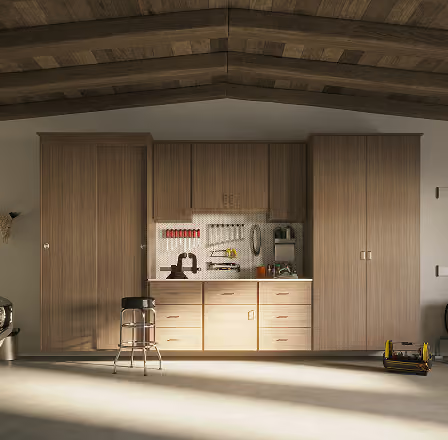
- Wall cabinets: closed storage at eye level. Best for chemicals, paint and anything you want out of sight.
- Weight capacity depends on the panel or rail material, how it is fastened to the studs and the rating of each hook. The lowest rating in the chain is the real limit.
- Plan a full wall by zone: slatwall where things change, cabinets where they don't.
Does your garage, basement or storage shed have a problem with too many tools, appliances, gadgets or devices just lying around on the floor or occupying random chairs? If yes, then wall storage systems are the solution. Wall storage systems include three elements: slatwall panels that cover the wall and take hooks and baskets anywhere, rail systems that run a horizontal track with hooks hung from it, and wall-hung cabinets that put storage behind doors. Slatwall is the most flexible, rails the simplest, cabinets the most finished. In a garage, laundry room or office, the right answer is usually a combination. The comparison below shows where each one fits, what each can carry and how to plan a full wall.
What are the main types of wall storage?
| Type | How it works | Best for | Trade-off |
|---|---|---|---|
| Slatwall panels | Grooved panels fastened to the wall; hooks, baskets and shelves lock into any groove | Tools, bikes, sports gear, cords, cleaning supplies, anything that changes | Open storage; everything is visible |
| Rail (track) systems | A horizontal steel track screwed to the studs; hooks and holders hang from it | A few heavy items in a row: ladders, bikes, wheelbarrows | Storage only along the rail line; limited placement |
| Wall-hung cabinets | Cabinets mounted to the studs above floor level | Paint, chemicals, small bins, anything behind doors | Fixed positions; cannot be rearranged |
| Pegboard | Perforated board with hooks | Hand tools over a workbench | Lower weight capacity; hooks fall out |
| Open shelving | Brackets and shelves on the wall | Bins and boxes | Dust and visibility; depth needed |
Slatwall vs. rails vs. cabinets: how do they compare?
| Factor | Slatwall panels | Rail systems | Wall cabinets |
|---|---|---|---|
| Flexibility | Highest. Move a hook to any groove, any time. | Medium. Hooks slide along one line. | Low. Interiors adjust; the cabinet stays. |
| Capacity per wall | High. The whole wall is usable. | Low to medium. One strip of the wall. | High per cabinet, but limited by how many fit. |
| Appearance | Finished panel surface; items visible. | Utilitarian. | Most finished. Items hidden. |
| Weight | Depends on panel material and fastening; rated per hook and per panel. | Often the highest per hook when fastened into studs; check the rating. | Rated per cabinet; depends on mounting. |
| Installation | Panels fastened through to studs across the wall. | One track screwed into studs. | Cabinets hung on a cleat or screwed to studs. |
| Best room | Garage, mudroom, hobby room | Garage, shed | Garage, laundry, office |
Garage wall storage ideas
The garage is where wall storage does the most, because the floor is for cars. In California and Las Vegas homes without a basement, the garage also does the job a basement would do elsewhere, so the walls carry a lot.
- Slatwall along the side walls, beside the parked cars, with bikes hung vertically, tools on hooks and baskets for balls and small gear. Panels sit flat against the wall and leave room for car doors to open.
- Cabinets on the back wall at eye level and above, for paint, chemicals and anything that should be out of a child's reach and out of sight.
- A rail for the heavy few: ladders, a wheelbarrow, a folding table, hung on a single track near the door.
- A short run of hooks by the entry door for helmets, bags and leashes, so the things grabbed on the way out are in one place.
- Heat in mind: inland garages run hot in summer. Keep anything that warps or degrades in heat inside the house, and use cabinets for items that should stay out of direct light.
Closet World's garage wall organizing systems use WallTec™ slatwall panels with a range of hooks, baskets and shelves, planned alongside Closet World's custom garage systems so the wall and the cabinetry work as one system. For a plan of the whole garage, see our guide to 30 garage storage ideas to maximize every square foot.
How much weight can wall storage hold?
Three things set the limit: the material the panel or rail is made of, how it is fastened to the wall and the hook or holder itself. A panel screwed into every stud carries far more than the same panel fastened only to drywall. Within a system, each hook, basket and shelf has its own rating, and the smallest number in the chain is the real limit.
To check a wall, weigh each item, divide by the number of hooks that carry it, and compare the result with the hook rating. Then add up everything hanging on one panel and compare the total with the panel rating. For example, a 30-pound bike hung from two hooks puts about 15 pounds on each hook. Add a 10-pound basket on the same panel and that panel carries about 40 pounds in total. (These numbers are an illustration, not a product rating.)
The practical rule: get the rating per hook and per panel from the manufacturer of the system you are installing, fasten into studs, and put the heaviest items, such as bikes and ladders, on hooks designed for them. Spread heavy items across the wall rather than clustering them on one panel.
Wall storage ideas for laundry rooms and mudrooms
Laundry rooms are small and the wall above the machines is usually wasted. Wall-hung cabinets above the washer and dryer hold detergent and supplies behind doors. A slatwall section beside them takes an ironing board, a drying rack and brooms on hooks. See Closet World's laundry room storage for built-in versions.
In a mudroom, a run of panels with hooks at two heights handles coats and bags for adults and kids, with a shelf above for hats and baskets. Closet World's mudroom storage puts the hooks, shelves and bench in one built-in unit.
Wall storage ideas for home offices
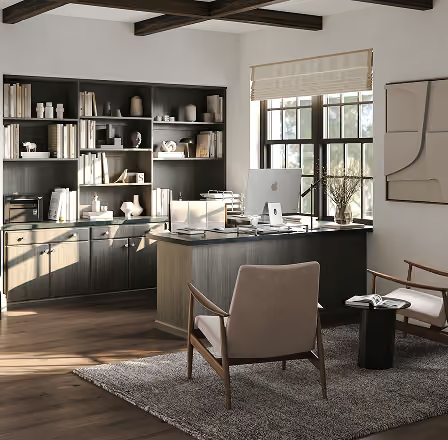
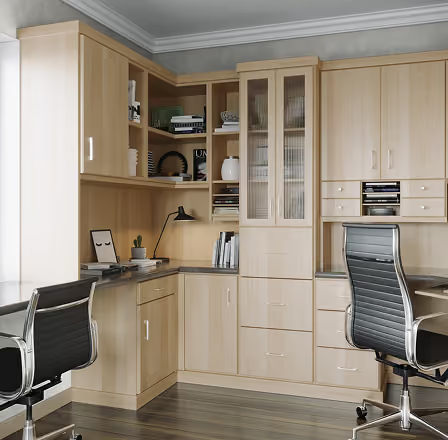
In an office, wall cabinets above the desk keep supplies and files off the work surface and behind doors. A short section of slatwall or a rail beside the desk holds headphones, cables and a tablet on hooks, so the desk clears at the end of the day. Open shelving above the cabinets handles books and display. Closet World's home office storage plans the desk, cabinets and shelving together.
How do you plan a full wall?
- Measure the wall and mark the studs. Note outlets, switches, windows and the swing of any door.
- Sort what the wall will hold into three groups: things you move often, things you want hidden, and heavy items.
- Assign zones: slatwall for the first group, cabinets for the second, a rail or heavy-duty hooks for the third.
- Set heights: daily-use hooks at shoulder height, cabinets above eye level, kid-reachable hooks lower.
- Check weight ratings for every panel, hook and cabinet against what you plan to hang.
- Leave open panel for what you haven't bought yet. A wall that is full on day one has nowhere to go.
Let's get your walls working
Schedule your free, in-home design consultation. A Closet World designer measures the wall, plans the panel, cabinet and hook layout and installs it with Closet World's own team.
Frequently asked questions
What is slatwall?
Slatwall is a wall panel with horizontal grooves, called slats, that hooks, baskets and shelves lock into. Because an accessory can move to any groove, the layout can change without new holes in the wall.
What is the best wall storage system for a garage?
For most garages, slatwall on the side walls for gear that changes, wall cabinets on the back wall for things you want hidden, and a rail or heavy-duty hooks for ladders and bikes.
How much weight can a slatwall hold?
It depends on the panel material, how it is fastened to the studs and the rating of each hook. Get the per-hook and per-panel rating from the manufacturer, fasten into studs and spread heavy items across the wall.
Are wall cabinets better than shelves?
For anything you want hidden or protected, yes. Open shelves are quicker to reach and better for bins you use often. Most walls use both.
Can you put wall storage on drywall?
Light items, yes. Anything heavy needs to be fastened into the studs behind the drywall, which is how panels, rails and cabinets are installed.

CW Man’s two cents
Let’s plan the room you actually have
Your designer plans around your space, your things and your routine. Free in-home or virtual design consultation, in as little as 90 minutes.