







Somewhere in your pantry right now, there are four open boxes of the same cereal. Nobody in your house will confess to opening any of them. There’s a bag of chocolate chips folded over and secured with a chip clip, a rubber band, and hope. And way in the back, behind the slow cooker you use every February, sits a can of pumpkin from a Thanksgiving you’d have to count backward to identify.
You’ve organized this pantry before. It looked incredible for eleven days.
This is not a willpower problem. It’s a shelving problem. Most pantries are a few deep shelves bolted at heights someone chose in an office decades ago, and deep, fixed shelves are where groceries go to hide. The fix isn’t more bins. It’s making the pantry itself do the organizing, so week twelve looks like day one.
How Do You Organize a Pantry So It Stays Organized?
Organize a pantry by how often you reach for things, not by how the labels look on a shelf. Everyday food lives between eye level and waist height, heavy appliances and bulk goods go low, and the once-a-year stuff goes high. When the layout matches how your kitchen actually runs, the pantry re-sorts itself every time you unload groceries, instead of relying on the version of you who alphabetizes things.
Professional organizers, including NAPO-certified pros, start with the same move: sort by function first, and only then decide what deserves prime real estate.
- The everyday zone (eye to waist). Breakfast, snacks, the pasta rotation. If you touch it more than twice a week, you shouldn’t need a step stool or a deep-knee bend to reach it.
- The heavy zone (floor to knee). Bulk water, the mixer, the air fryer that won “most likely to succeed” and now blocks the flour. Low shelves rated for real weight, so nothing lives on the floor.
- The someday zone (up top). The turkey roaster, the fondue set from your wedding, the pumpkin can’s retirement community. Label it, because you will not remember.
Why Do Things Disappear at the Back of Pantry Shelves?

Because the shelf is deeper than anything you store on it. Builder pantry shelves commonly run 16 to 24 inches deep, while a cereal box needs about 3 and a can needs about 4, so every shelf hides a back row you can’t see and a front row that keeps getting restocked. That’s how you end up sincerely owning four open boxes of the same cereal.
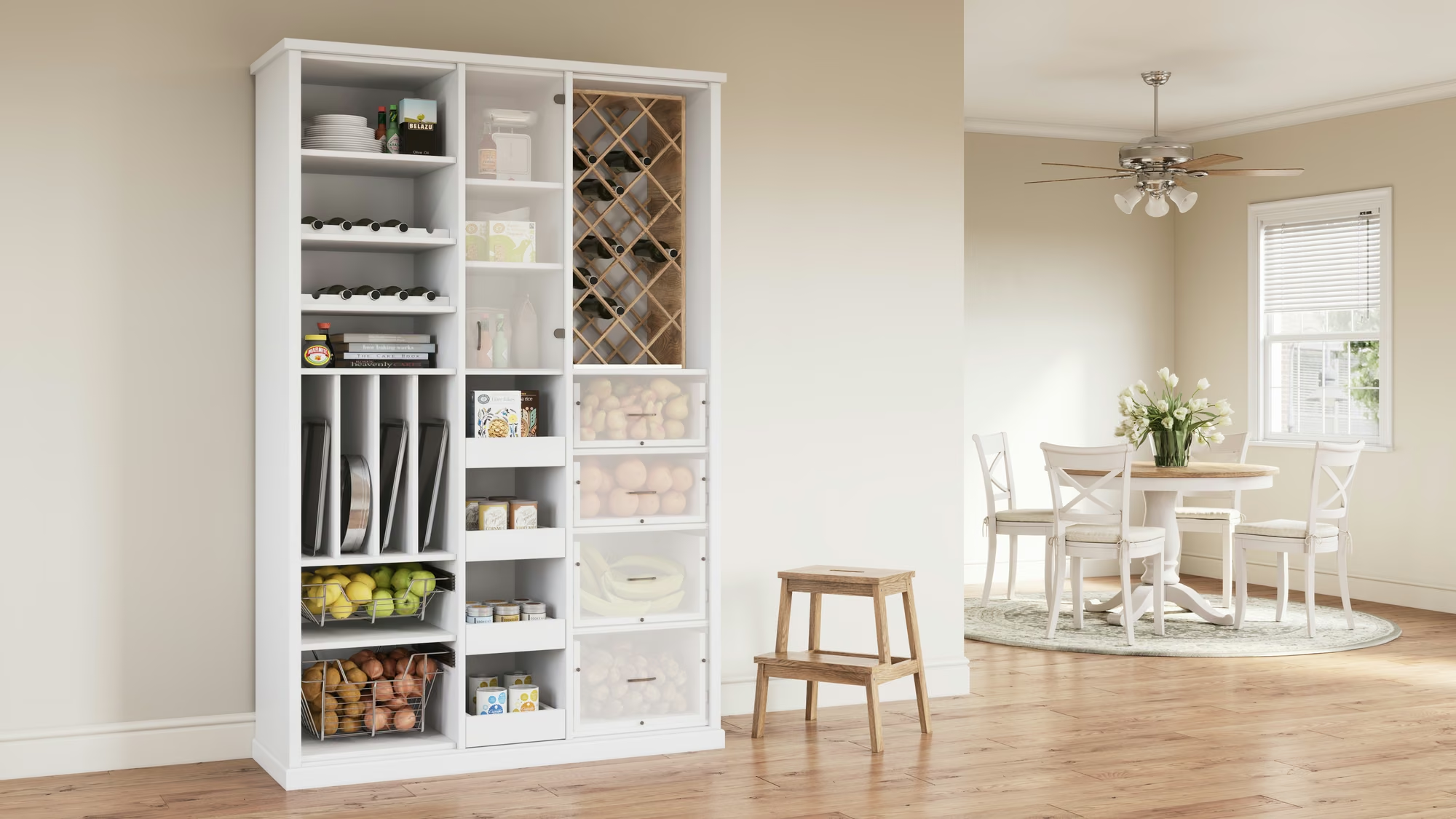
Two fixes, one cheap and one permanent. The cheap one: treat the back of every deep shelf as long-term storage only, and keep daily items in a single visible row. The permanent one: pull-out shelves and drawers, which bring the back of the shelf to you. Once the whole shelf rolls forward, there is no “back,” and the pumpkin can has nowhere left to hide.
First In, First Out (the Restaurant Trick That Works at Home)
Restaurants call it FIFO: new stock goes behind old stock, so the oldest gets used first. FoodSafety.gov recommends the same rotation at home, and it’s the single habit that stops the quiet expiration-date graveyard forming behind your canned goods. Angled can racks do it automatically: load from the top, grab from the bottom, and the cans rotate themselves like polite little soldiers.
Pantry Organization Ideas Worth Stealing
- Drawers for the snack chaos. Granola bars, pouches, and fruit snacks in a shallow drawer end the avalanche that happens when a kid excavates the one flavor they’ll currently accept.
- A door-back rack for the thin stuff. Spices, foil, wraps, and bags on the back of the door free up a full shelf inside, and you stop buying a third jar of cumin because the first two were hiding behind the vinegar.
- One basket per snack-aged human. Each kid gets a labeled bin at their own reach height. What’s in the bin is fair game; what’s not, isn’t. You just outsourced fifty negotiations a week.
- A charging shelf for the countertop refugees. A pantry outlet plus one dedicated shelf gives the blender, kettle, and air fryer a home that isn’t your counter.
- Deep drawers for potatoes and onions. Ventilated pull-out bins down low keep produce dark and dry, and end the mystery of the bag that reorganized itself into something new.
The Butler’s Pantry Question

If you have (or you’re planning) a butler’s pantry, the same rules apply with one upgrade: it’s a staging area, not just storage. Countertop for landing groceries and prepping coffee, closed cabinets below for the entertaining gear, open adjustable shelving above for the everyday. The point of a butler’s pantry isn’t fancier shelves. It’s moving the mess of getting ready out of sight of the people you’re getting ready for.
What’s the difference between a butler’s pantry and a walk-in pantry?
A walk-in pantry is a small room for storing food and kitchen overflow; a butler’s pantry is a pass-through workspace, usually between the kitchen and dining area, with counter space for staging and serving. Plenty of California homes blend the two: a walk-in with a counter run inside it, which gets you the storage and the staging in one footprint.
When the Bins Have Done All They Can
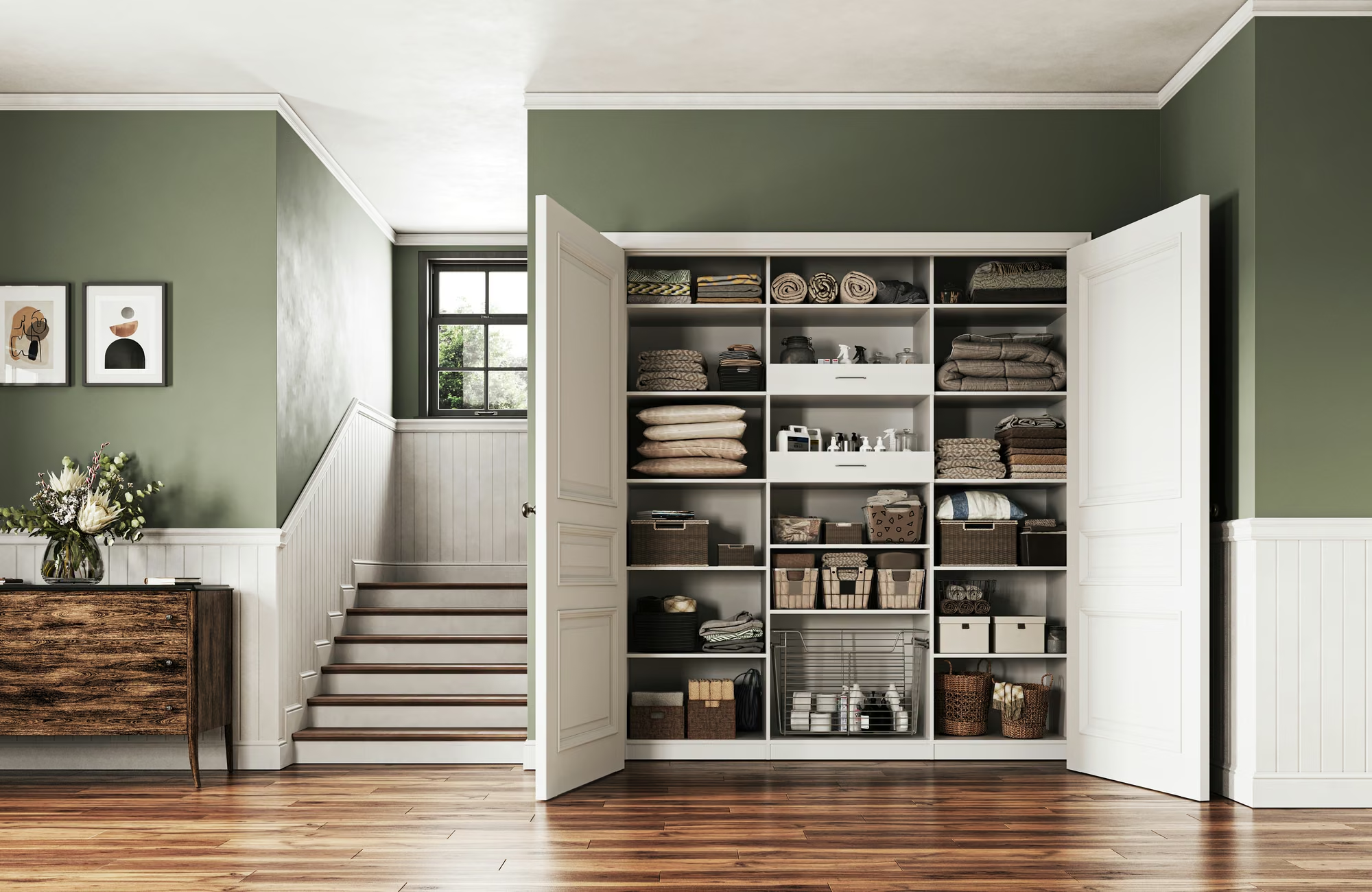
Matching containers are lovely, and they cannot fix shelf depth, fixed spacing, or the fact that your pantry was designed for a family that apparently ate nothing. A custom pantry system rebuilds the room around what you actually buy: adjustable shelves in 1-inch increments, pull-outs where the deep shelves used to be, drawers for the small chaos, and racks that rotate the cans for you.
We’ve been designing and manufacturing custom pantry systems in California since 1991, measured to your room and your grocery habits, not a builder’s guess. If the rest of the house has the same problem, our closet organization ideas guide applies the same logic behind every other door.
Small Pantry Organization: When the Pantry Is a Cabinet With Ambitions

Plenty of California kitchens don’t have a pantry so much as a tall cabinet doing its best. Small pantry organization runs on the same rules with the volume turned up: every inch of height gets a shelf, every shelf gets exactly one row deep of daily items, and the door earns its keep with a full-height rack. In a small pantry, a single lazy Susan in the corner recovers the one spot where three bottles of oil currently stand in a trust circle, each assuming one of the others is the open one.
The other small-pantry move is admitting what doesn’t belong there. The stockpot, the party platters, and the bread machine (purchased with love, used with ceremony, twice) can live in a garage cabinet or a hall closet, freeing the kitchen pantry for food. A pantry that only stores food is a pantry that stays organized, because groceries rotate weekly and bread machines rotate presidentially.
Pantry Shelving and Storage: What the Pros Actually Spec
If you’re comparing pantry storage ideas, here’s how designers think about pantry shelving, and it’s less about product and more about depth math:
- 11 to 14 inches for cans and jars, which fits two visible rows and forbids a third, invisible one. Deep pantry shelves are for appliances and bulk, never for the small stuff that hides.
- 16 to 20 inches for small appliances, on a slide-out so the mixer comes to you instead of you going in after the mixer, which is how backs get thrown and vows get made.
- Adjustable tracks everywhere, because the day you switch from cereal boxes to a bulk haul of protein powder, your shelf spacing needs change with zero warning and strong opinions.
- Drawers below counter height, where crouching to see a shelf fails but pulling a drawer works. The lowest shelf in every pantry is a rumor; a drawer is a fact.
That’s the real difference between a pantry cabinet full of organizers and an organized pantry cabinet: the first one fought the shelving and lost, the second one changed the shelving and never had to fight.
Book your FREE in-home design consultation and let’s build a pantry where the cereal boxes can’t multiply. The pumpkin can gets a labeled shelf and a fresh start. No judgment; it’s been through enough.