









Originally published June 17, 2024 · Updated October 2026
A shoe cubby is shoe storage divided into compartments, so pairs stay separated, visible and off the floor. The term is often used for organized shoe storage in general, including shoe shelves, racks, cabinets and built-in closet systems. Cubbies come in over-the-door, floor-standing, wall-mounted and custom-built versions, and one is worth adding when shoes pile up on a closet or entryway floor.
Key Takeaways
- A shoe cubby gives each pair its own compartment. A shoe rack holds pairs side by side, and a shoe cabinet keeps them behind doors.
- A cubby is worth it when it replaces a floor pile and uses empty wall height. Count your pairs and compare that number with the slots a cubby would give you.
- Standard cubbies suit flats, sneakers, sandals and many heels. Tall boots need taller compartments or shelves in a mixed layout.
- Plan around your shoes: measure the space and your largest pairs, keep everyday shoes at hand height and leave a few spare slots for new pairs.
Is a shoe cubby worth it in a closet?
A shoe cubby is worth it in a closet when it replaces a floor pile with visible, upright storage and uses wall height that was empty. It is less useful if you own only a few pairs, if most of your shoes are tall boots, or if the closet floor is already clear. The test is to count your pairs and compare that to the slots a cubby would give you.
What Is a Shoe Cubby?
A shoe cubby is a storage unit divided into open, box-shaped compartments. Most compartments hold one pair, though larger ones can take several pairs or a pair of boots. The dividers are what set a cubby apart: on a shoe rack or open shelf, shoes sit side by side, and in a shoe cabinet they sit behind doors.
Cubbies can be freestanding furniture, a door organizer, a wall-mounted unit, or shelving built into a closet system, and many layouts combine cubbies with open shelves or a cabinet.
Shoe Cubby vs. Shoe Rack vs. Shoe Cabinet
The difference is how each one holds shoes: a cubby separates pairs into compartments, a rack or open shelf holds them side by side, and a cabinet keeps them behind doors. Many closets and entryways combine more than one.
| Storage type | Best for | Keep in mind |
|---|---|---|
| Shoe cubby | Separating pairs into individual compartments | Fixed compartment heights may not fit boots |
| Shoe rack | Simple, open storage for frequently worn shoes | Pairs sit side by side and stay on view |
| Shoe cabinet | Hiding shoes behind doors | Doors need clearance to open |
| Shoe shelves | Flexible storage for different shoe heights | Shelf spacing decides which shoes fit; adjustable shelves can be reset |
| Custom shoe storage | Making use of a specific closet or entryway footprint | Planned and built in with the rest of the space |
Advantages of a Shoe Cubby
The main advantage of a shoe cubby is that it turns a messy, horizontal problem into a tidy, vertical one.
Vertical organization
Shoes on a closet floor take the most valuable space in the closet and still get kicked around. A cubby stacks pairs upward, freeing the floor and using wall height that hanging clothes do not reach.
No bending or digging
Every pair sits in its own slot at a known height, so you can see what you own and pull a pair out without moving three others. Pairs you wear most live at hand level.
Cleaner appearance
A wall of shoes in neat rows reads as intentional. Open storage leaves shoes exposed to the surrounding air and makes frequently worn pairs easy to access.
Customization
Cubbies can be sized and arranged to the shoes you actually own. Mixed compartment sizes handle boots alongside flats, and in a custom closet the cubby section combines with shelves, drawers and hanging space.
Types of Shoe Cubbies
Shoe cubbies fall into four types. The right one depends on your space, your pair count, and whether you want to install anything permanently.
Over-the-door shoe cubby
A fabric or plastic organizer with pockets or slots that hangs over the top of a door. It needs no installation and no floor space, and it suits flats, sandals and lighter shoes.
Floor-standing shoe cubby
A freestanding furniture piece, usually a wood or laminate grid, on the closet or entryway floor. It holds more than a door organizer and can be moved, but it takes floor space and may not match the closet's finishes.
Wall-mounted shoe cubby
A cubby unit fastened to the wall, which keeps the floor clear and places shoes at a comfortable height. Wall-mounted units need secure installation appropriate to the wall and the weight of the shoes, and they cannot be moved once installed.
Custom-built shoe cubby
Cubby shelving designed and built as part of a closet system, sized to your shoe count and matched to the closet's finish. It is the most permanent option and is fitted to the exact space, with adjustable shelves and mixed slot heights available.
| Type | Best use | Closet fit | Flexibility |
|---|---|---|---|
| Over-the-door | Renters, small reach-ins, light shoes | Door only; no floor or wall space | High: hangs and removes without tools |
| Floor-standing | Entryways, walk-ins with spare floor | Takes floor space; can block low hanging | Medium: movable, fixed slot sizes |
| Wall-mounted | Narrow closets, entry walls | Uses wall height; needs secure installation | Low: fixed once installed |
| Custom-built | Any closet where shoes are a daily problem | Built to the exact space; matches finishes | High at design; permanent afterward |
How to Plan Shoe Storage
Plan shoe storage around your shoes and the space, not around the first unit you find. Count your pairs, measure the space and your largest shoes, decide which pairs need the easiest access and leave room to grow, then choose the storage type.
- Count your pairs. Line up every pair you keep in that closet or entryway. The number tells you how many compartments or how much shelf length you need.
- Measure the available wall, floor or door space. Include the depth, and note what the storage would displace: a low hanging rod, a shelf or the door swing.
- Measure unusually large shoes and boots. Check the length of your largest shoes against the depth available, and the height of high-tops and boots against the compartment or shelf height.
- Decide which pairs need the easiest access. Everyday pairs belong at hand height. Occasional and formal pairs can go in top or bottom slots, or in another closet.
- Leave room for future additions. Plan a few spare compartments or some open shelf space so new pairs have a place.
- Choose between open cubbies, shelves, cabinets or a combination. Use the comparison above to match each group of shoes to the storage that suits it.
Different shoes need different slots, which is why a mixed layout works best.
| Shoe type | Storage that fits | Notes |
|---|---|---|
| Flats, sandals and loafers | Standard cubby slot; over-the-door pockets also work | Light shoes suit a door organizer when floor and wall space are short |
| Sneakers and running shoes | Standard open-fronted slot | Open slots keep daily pairs easy to grab |
| Heels | Standard slot or an open shelf | Pair heel-to-toe to save width |
| High-tops and ankle boots | Taller compartment | Plan a row of taller slots or use adjustable shelves |
| Tall boots | A dedicated shelf or floor section rather than a cubby | Store upright with boot shapers so they do not slump |
| Occasional and formal pairs | Top or bottom slots, or lidded boxes on a high shelf | Keep everyday pairs at hand height and move these out of the way |
Can a Shoe Cubby Store Boots?
Not always. Standard cubbies work well for flats, sneakers, sandals and many heels, but tall boots need more vertical clearance. A mixed storage layout can combine standard shoe compartments with taller shelves for ankle boots, riding boots and knee-high styles.
In a custom closet, adjustable shelves let you change those heights as your collection changes, and tall boots can stand on a dedicated shelf or floor section instead of in a cubby.
Where a Shoe Cubby Works Best
A shoe cubby works wherever shoes come off: the bedroom closet and the entryway.
Reach-in closet. In a reach-in closet, a cubby section on one side wall or beneath a shortened hanging rod uses depth that a single shelf wastes. Custom shoe shelves can be incorporated into a reach-in or walk-in closet design, depending on the layout; this guide to organizing a small closet covers fitting shoes alongside everything else.
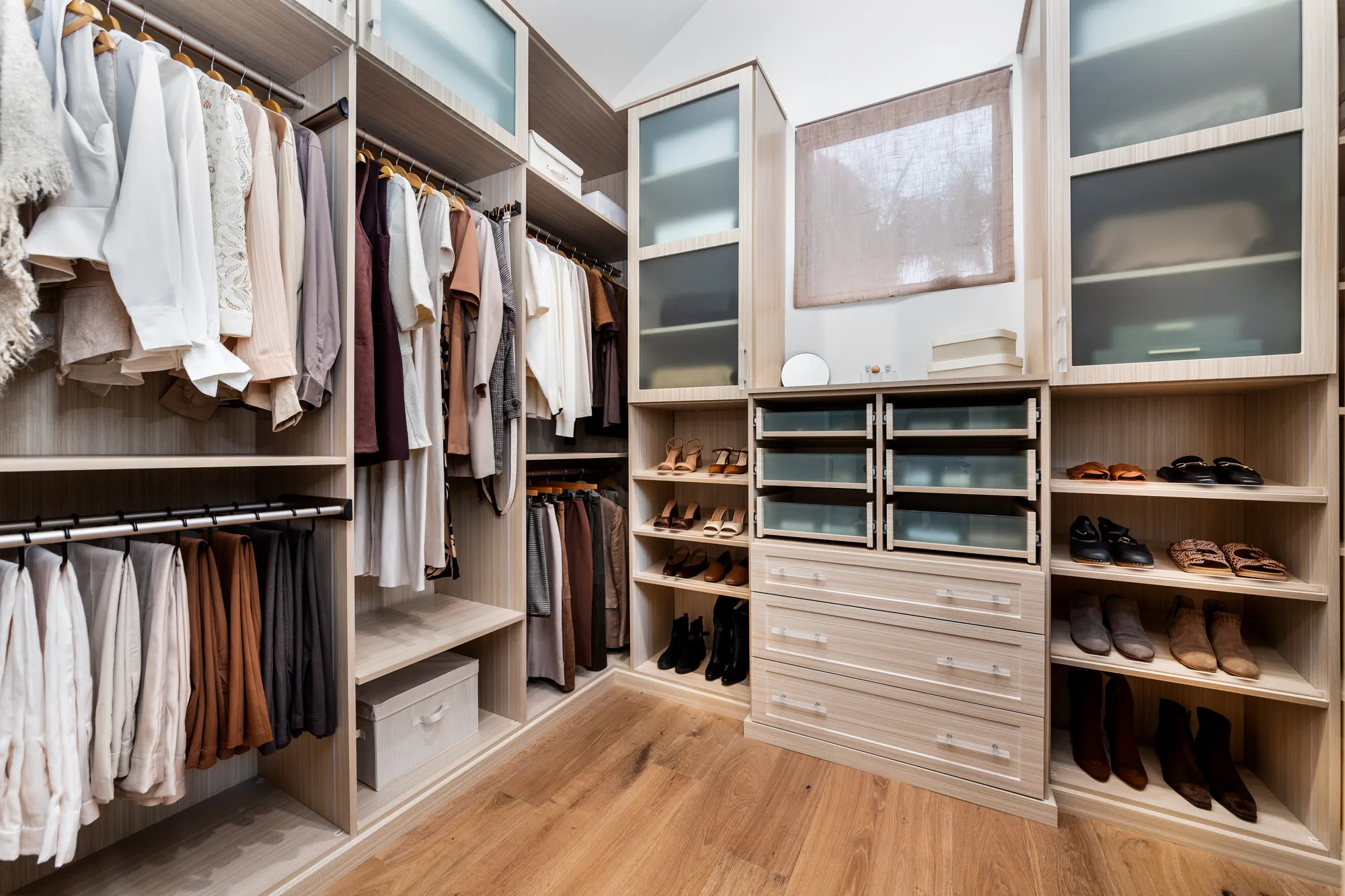
Walk-in closet. A walk-in closet has room for a full shoe wall, often floor to ceiling, with everyday pairs at eye level and occasional pairs above. A full wall of shoes in matching finish becomes the closet's visual anchor.
Entryway. In an entryway, shoe storage gives everyday footwear a designated place near the door, keeping it separate from clothing and less-used pairs in the bedroom closet. An entryway closet can combine custom shoe shelves with hooks, drawers and a built-in drop zone.
DIY vs. Pre-Built Shoe Cubbies
A DIY cubby can be sized exactly to your shoes, but it takes tools and skill to get square, stable compartments, and it may not match the closet's finish. A pre-built cubby is ready to use, but its fixed sizes may leave gaps or fail to fit boots.
A custom-built cubby sits between the two: designed to your measurements like DIY, installed like pre-built, and finished to match the closet. It makes the most sense when you are already redesigning the closet, so the shoe section is planned with the hanging, shelving and drawers as one system.
Custom Shoe Shelves and Pull-Out Shoe Storage
Built-in shoe storage deals with the two main limits of a freestanding cubby: fixed slot heights and a hard-to-reach back row. Custom shoe shelves can be set at the heights your shoes need, adjusted as your collection changes and placed where the wall space is. Pull-out shoe storage slides forward from a deeper section, so pairs at the back are as easy to reach as those at the front.
Closet World's reach-in, walk-in and entryway closet pages all list custom shoe shelves, and pull-out shoe storage appears among the entryway closet accessories. The entryway page notes that many custom spaces can be completed in as little as 9 to 14 days, depending on the scope of the project and the features selected. For more ways to combine shoe storage with the rest of the closet, see these closet organization ideas.
Frequently asked questions
What is the difference between a shoe cubby and a shoe rack?
A shoe cubby separates pairs with vertical dividers so each pair has its own compartment. A shoe rack is open rails or shelves where shoes sit side by side and slide into each other.
How many shoes fit in a shoe cubby?
It depends on the number and size of compartments. Count your pairs first, then choose or design a cubby with a few spare slots. Boots need larger compartments and reduce the total.
Can you put a shoe cubby in a small closet?
Yes. An over-the-door organizer uses no floor or wall space, and a wall-mounted or custom cubby on the end wall uses height the hanging rod does not. Shortening one section of rod often makes room for a cubby beneath it.
Should shoes be stored in a closet or an entryway?
Everyday shoes that come off at the door belong in the entryway, which keeps outdoor dirt near the door. Dress shoes and occasional pairs belong in the bedroom closet. Many homes use a small cubby at the entry and a larger one in the closet.
What is the best shoe storage for an entryway?
It depends on how many pairs come through the door and whether you want them on view. Open cubbies or a shoe rack keep everyday pairs easy to grab, a shoe cabinet keeps them behind doors, and a built-in entryway closet can combine shoe shelves with hooks, drawers and a drop zone.
Ready to organize your shoes? Get a free in-home design consultation.
A Closet World designer can help measure your available space and plan shoe storage around your shoes, closet layout and other storage needs. Schedule a free in-home design consultation.