








Right now, on your closet floor, there is one running shoe. Just the one. Its partner is somewhere in the house, possibly the car, possibly a parallel universe. Behind it: a hill of flats, sandals, and sneakers in a formation geologists would call a debris field, plus one pair of heels still in the box they came in, because the box felt like protection and the floor felt like the only shelf you had.
You were right about one thing: the floor was the only shelf you had. Builder closets give shoes nothing. One rod, one shelf, and a floor, and the floor always wins by forfeit.
The fix isn’t discipline, and it isn’t seventeen clear plastic boxes. It’s giving shoes actual architecture. Here’s what works, by shoe and by space.
What’s the Best Way to Store Shoes in a Closet?
The best shoe storage in a closet is dedicated shelving sized to your shoes, at a height you can see and reach without kneeling. Everything else (hanging bags, over-door pockets, floor racks) is a workaround for not having shelves. Shoes you can see get worn; shoes in a pile get excavated twice a year and apologized to.
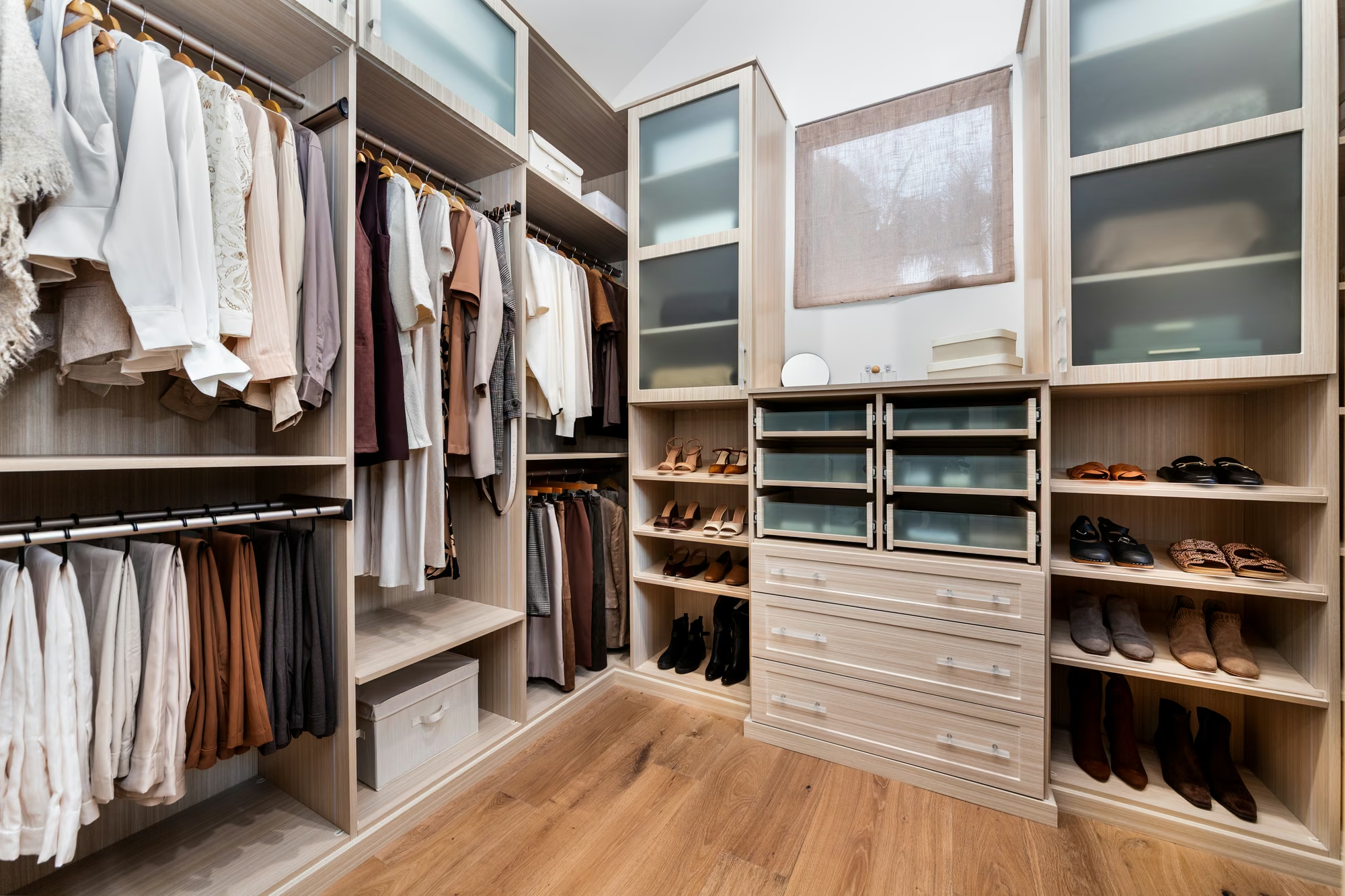
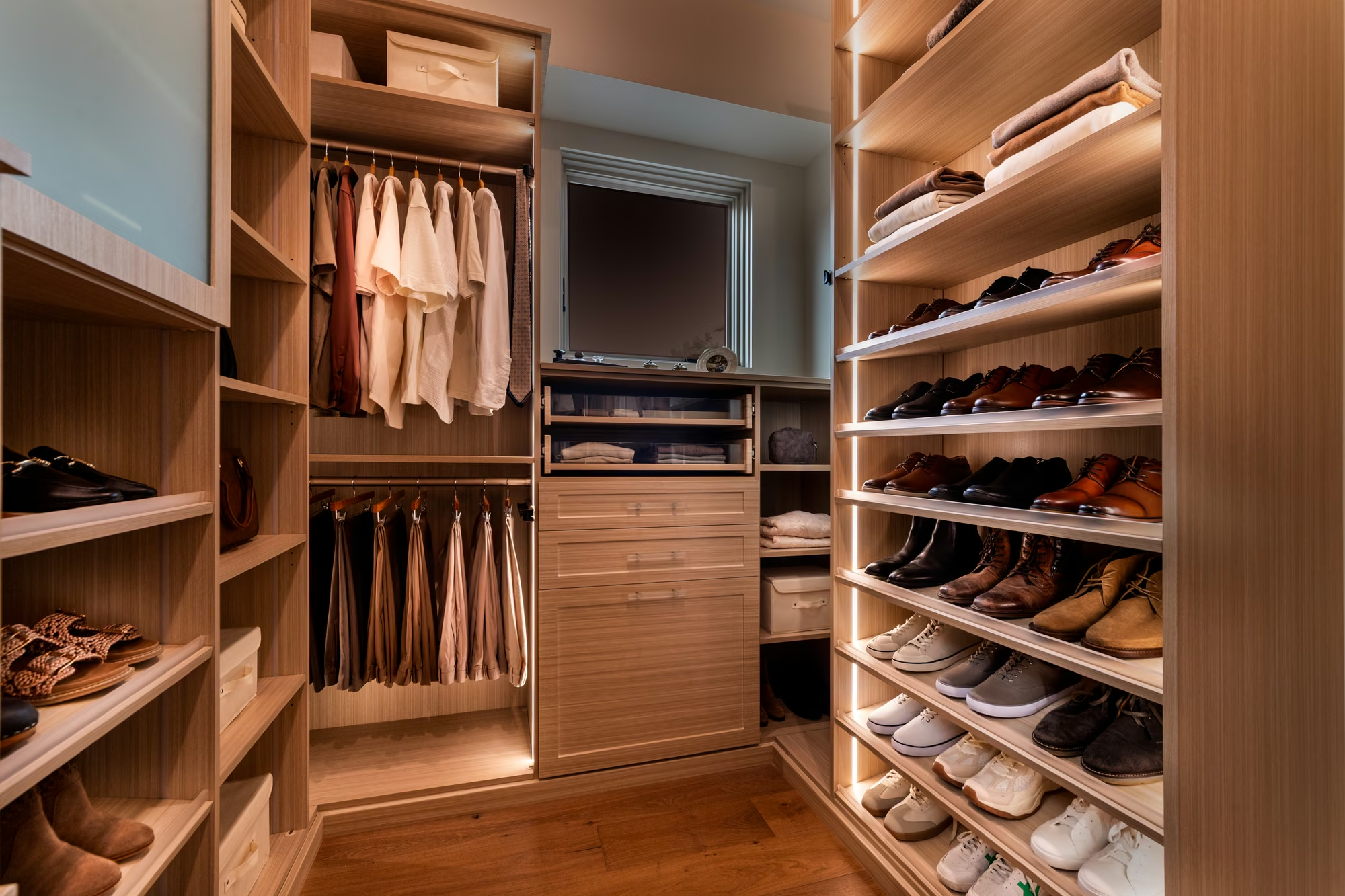
- Flat shelves for the everyday rotation. Sneakers, flats, loafers: a 12-inch-deep shelf holds most of them heel-in, and adjustable shelves let you stack rows just 6 to 7 inches apart, so a single tower holds a startling number of pairs.
- Angled display shelves for the ones you love. Tilted shelving with a heel rail shows the whole shoe like a store display. This is where the good ones live, visible enough to actually get chosen at 7 a.m.
- Cubbies for kids and chaos. One cubby per pair means a four-year-old can put shoes away, in the sense that the shoes will be in the cubby, and we’re calling that a win.
- Drawers or bins for the seasonal bench. Snow boots in July and sandals in January don’t need prime shelf space. Labeled pull-out bins down low or up high keep the off-season out of the starting lineup.
How Many Shoes Are We Actually Designing For?
Be honest during this part, because the shelf math is unforgiving. Count every pair, including the ones in boxes, the ones by the front door, and the pair in your car for emergencies that have never once occurred. Whatever the number is, add 20 percent, because shoe collections only move in one direction. A designer sizing a closet plans shelf runs off that number, which is why a custom shoe wall never has that one sad overflow pile at the end. The pile was designed out of existence.
Should you store shoes in their boxes?

Only for long-term storage of shoes you rarely wear. For anything in rotation, boxes fail on both counts: you can’t see the shoes, so you don’t wear them, and stacked cardboard becomes a game of Jenga where the prize is an avalanche. If you love the protection of a box, clear stackable cases with drop-fronts give you the shield and the visibility. Podiatrists also recommend letting shoes air out between wears, which sealed boxes and heaped piles both prevent.
Boots: The Tall Problem
Boots are the reason your shelf spacing can’t be one-size-fits-all. Ankle boots need about 8 inches of height, tall boots 16 to 20, and tall boots stored slumped over develop a permanent lean, like they’ve given up. Give boots one taller shelf section, use boot shapers or rolled magazines to keep them upright, and they’ll outlive several of your other resolutions.
The Entry Problem Is a Different Problem
The shoes that live by the front door are a traffic issue, not a storage issue, and no bedroom closet fixes them. A small bench-and-cubby unit at the entry catches the daily two or three pairs, and the closet handles the rest of the collection. Two systems, two jobs, zero piles. If the whole closet needs the same rethink, our roundup of closet organization ideas covers every shelf, rod, and drawer around the shoes.
Shoe Organizers for Closets: What Works, What’s a Gadget
The shoe organizer aisle is enormous and about a third of it works. Here’s the honest field guide:
- Over-the-door shoe organizers hold a lot and display nothing; they’re fine for flip-flops and kids’ shoes, and they thump the door like a visitor every time it closes.
- Hanging fabric shelves sag by month two, and a sagging shelf tips its shoes forward like it’s presenting evidence. Temporary use only.
- Stackable shoe racks work until the stack hits three units, at which point retrieving from the bottom becomes a game with consequences.
- Under-shelf slide-out racks and drawer inserts are the sleepers of the category: they put shoes in the closet’s wasted vertical gaps and actually slide, which beats reaching.
- Built-in shoe shelves are the category the gadgets are imitating. Adjustable, sized to your count, zero assembly, zero sag, and they’ll outlast every fabric cube ever sewn.
Sneaker Storage and the Collection Question

If sneakers are a collection and not just footwear, storage becomes display plus preservation: open shelving at eye level for the rotation, clear drop-front cases for the pairs that came with a backstory, and everything out of direct sun, because sunlight yellows midsoles with the patience of a hobbyist. Depth matters here too: sneakers run bigger than flats, so spec those shelves at 13 to 14 inches so heels aren’t hanging off the edge like they’re thinking about it.
How Deep Should Shoe Shelves Be?
Twelve inches deep handles most women’s and kids’ shoes; 13 to 14 inches covers men’s sizes and bulkier sneakers; anything deeper starts hiding a second row, and a hidden row of shoes is just the floor pile with better posture. Pair those depths with 6-to-7-inch vertical spacing for flats and sneakers, 8 for heels, and one tall section for boots, and the closet can swallow the whole collection with room for the 20 percent you’re going to add. We both know about the 20 percent.
Quick Answer: How Do You Store a Lot of Shoes in a Small Closet?
Go vertical and go shallow: a floor-to-ceiling shelf tower with rows spaced 6 to 7 inches apart holds 25 to 30 pairs in about 2 feet of closet width, which is more than most floor piles hold in the entire closet. Reserve the floor for nothing. The floor is where organization goes to die.
Closet World builds custom closet systems with shoe shelving designed around your actual count (plus the 20 percent), manufactured in our California facilities since 1991. Book your FREE in-home design consultation and we’ll design a home for every pair, including the missing running shoe, wherever it is. It can’t hide from shelving forever.