










Key takeaways
- Hang dresses, suits, jackets, silk shirts and dressy pants.
- Fold sweaters on shelves so they keep their shape.
- Space shelves 14 to 16 inches apart; keep stacks to about 12 inches.
- Rainbow color order makes a closet tidy and pleasing.
- Shelf dividers and baskets keep stacks from collapsing.
Just because your home is the picture of organization doesn’t mean that your closet follows suit. In fact, even the most methodical of people sometimes find that their closets are catch-alls for items that don’t have a designated spot elsewhere in the house. The good news is that it’s possible to design a closet system that meets your needs and keeps all that clutter in check.
Here are some tips for creating a closet shelving system that works well for you and your family.
Decide What to Hang and What to Store
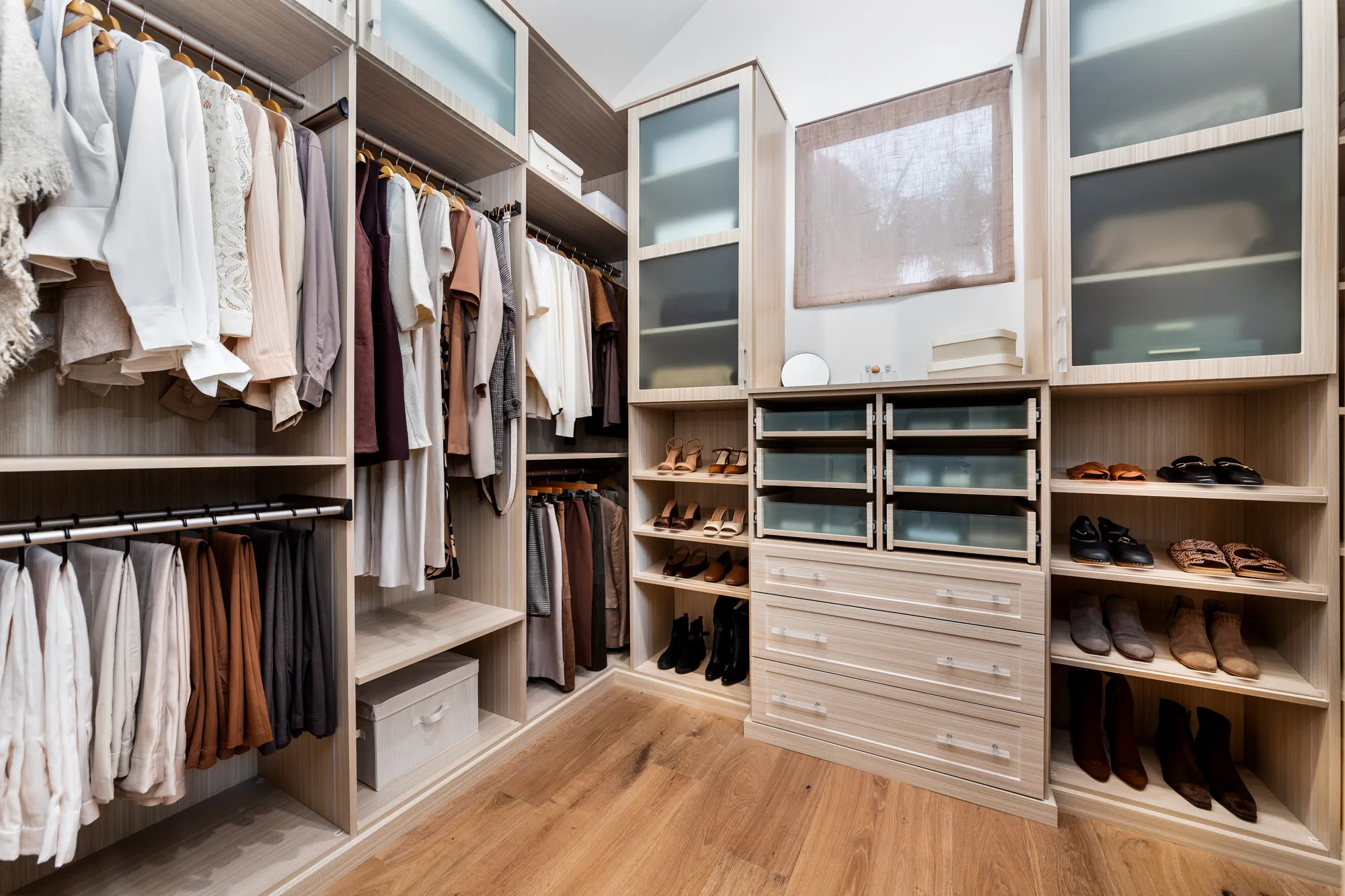
The first step in creating a shelving system is deciding what items should be folded and which should be hung on clothing rods. In general, it’s best to hang up your dresses, suits, jackets, silk shirts and dressy pants. Additionally, many people choose to hang up their t-shirts and tank tops for easy viewing. On the other hand, delicate knits like sweaters should be folded so they don’t lose their shape. You can either hang or fold your jeans depending on your preference and the amount of shelf space you have available.
Switch Up Your Shelf Height
One of the best ways to revamp your closet system is to vary the height of your shelves. The fact is that shelves that are spaced too far apart tend to result in messy stacks of apparel. As a result, you might struggle to find the exact article of clothing you need. For a tidier and more efficient closet, aim to space shelves between 14 and 16 inches apart. Try to keep clothing stacks to 12 inches so you have plenty of hand space to grab what you need.
Color Coordinate Clothes
An unattractive closet isn’t just an eyesore. It can also affect your mood, putting you in a bad place from the moment you wake up. If you want to give your closet a makeover and add some pep to your step, think about color coordinating this part of the home. For example, you could rearrange your clothes like a rainbow, putting all the reds together followed by the oranges, yellows, etc. The end result is both organized and aesthetically pleasing.
Use Shelf Dividers or Baskets
If you’ve just implemented a new shelving system, then you might be worried that your closet will soon be overwhelmed by soaring piles of clothing. Avoid this eventuality by adding shelf dividers of baskets. This way, you don’t have to worry about clothing stacks collapsing into each other. Additionally, pretty baskets are great for stowing scarves, belts, and other accessories that are on the small side.
Trust Us to Design Your Custom Closet System
When you work with Closet World’s trusted design team, you can rest assured knowing we’ll support you every step of the way. We pride ourselves on offering an extensive selection of colors, finishes, features, and accessories, so there’s an option for every taste and budget. Additionally, our installers specialize in installing closet systems quickly and efficiently. For more on what we do, call today or check out our catalog to see what’s available.
Frequently asked questions
How far apart should closet shelves be?
Aim to space shelves between 14 and 16 inches apart. Shelves spaced too far apart tend to lead to tall, messy stacks that make it hard to find what you need.
How high should clothing stacks be on a shelf?
Try to keep stacks to about 12 inches high. That leaves plenty of hand space above the pile, so you can grab an item without toppling everything.
Which clothes should go on closet shelves?
Fold delicate knits like sweaters so they do not lose their shape. Jeans can go either way depending on your shelf space. Dresses, suits, jackets, silk shirts and dressy pants are best hung.

CW Man’s two cents
Let’s plan the room you actually have
Your designer plans around your space, your things and your routine. Free in-home or virtual design consultation, in as little as 90 minutes.