









Key takeaways
- Items that pair with fewer than three others rarely earn their space.
- If something has not fit in years, it no longer deserves a hanger.
- Move off-season coats and scarves to a hall closet or under the bed.
- Sell pieces that have waited too long for tailoring.
- Clean out your closet once a year.
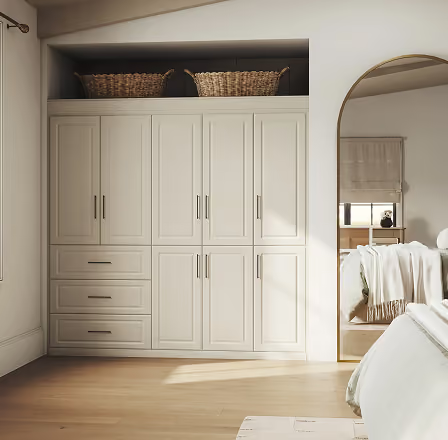
Outfitting your home with custom closets is only half the battle. Keeping them organized is another thing altogether. Even if you catch the spring cleaning bug, you might not know where to start. Here are seven questions to ask yourself as you ponder what to keep, what to give away, and what to move around in your closet:
1. What Can I Pair This With?
If you have a loud pair of pants that only work with one shirt (and that shirt is often dirty), it might be time to say goodbye. Even if they’re fun, items that can’t be paired with at least three other articles of clothing are not usually earning their keep in your closet.
2. Does This Still Fit?
Most of us have an outfit that hasn’t fit in two years. We hold on to it, hoping that one day, after enough cardio, we can wear it again. But custom closets only have so much real estate. If something doesn’t fit, it doesn’t deserve a hanger anymore.
3. Does This Belong Somewhere Else?
Not everything that’s wasting space in your closet needs to be sold or given away – some of it can be stored elsewhere. If you have winter coats or scarves collecting dust in the corner, try putting them in a hall closet or under your bed during warm seasons.
4. Has This Been Awaiting Tailoring?
You got a pair of slacks on sale. They’re cute! They’re also three inches too long and you never got them tailored. What are the chances you’ll actually follow through and get them hemmed? If the answer is “probably at half-past never,” try selling them instead.
5. Do I Know Someone Else Who Needs This?
Items you love could become clothes that someone else loves just as much. Do you have a friend who is currently interviewing for a job? A cousin who is moving to a warmer climate? As you clean your closet, consider who might need some of your belongings more than you do. It’s an easy way to shed some extra attire while doing loved ones a favor.
6. What Do I Wish I Had Instead?
If lifting up your belongings one by one only inspires a whole lot of “meh,” start thinking about what you’d rather see filling the shelves of your closet. Envisioning what will replace the stuff you don’t need makes it easier to part ways.
7. How Would I Feel If My Ex Saw Me in This?
Finally, a simple test can reveal how good an item of clothing makes you feel. If you ran into your ex, would you feel confident and proud to be wearing each item in your closet? Or would you hide behind a tree if they spotted you in some of your jeans? Anything that doesn’t pass muster probably doesn’t need to remain in your closet.
Custom closets make it easy to find a place for everything… but does everything deserve a place? Cleaning your closet once a year means you don’t end up hoarding things you’ll never wear again. With these seven questions, you can get rid of old clothes and make room for more modern choices.
Frequently asked questions
What questions should I ask when cleaning out my closet?
Ask what you can pair it with and whether it still fits. Ask if it belongs elsewhere or is waiting on tailoring that will never happen. Then ask who else might need it, what you wish you had instead and whether you feel confident in it.
How do I know if a clothing item is worth keeping?
A useful test is versatility. Items that cannot be paired with at least three other pieces are usually not earning their keep. Pieces that do not fit or make you feel self-conscious are also good candidates to let go.
How often should I clean out my closet?
Once a year is a good rhythm. An annual clean-out keeps you from hoarding clothes you will never wear again. It also makes room for the pieces you truly love and wear.

CW Man’s two cents
Let’s plan the room you actually have
Your designer plans around your space, your things and your routine. Free in-home or virtual design consultation, in as little as 90 minutes.