








Originally published March 19, 2024 · Updated October 2026
A good home office lighting plan combines three layers: ambient light from a ceiling fixture that fills the room evenly, task light from a desk lamp or under-cabinet strip aimed at your work surface, and accent light from sconces or shelf lighting that softens shadows. Position light in front of you rather than behind, control daylight glare with shades, and give each layer its own switch.
Key Takeaways
- Layer the lighting: a ceiling light sets the base brightness, a task light covers the desk, and accent light on shelves or cabinetry fills in shadows, each on its own control.
- Choose the ceiling fixture for coverage and glare control first. A diffused flush mount suits low ceilings, and no fixture should sit directly above the monitor.
- Place a desk lamp on the side opposite your writing hand. For video calls, face soft, diffused light slightly above eye level and keep bright windows out of the background.
- Upper cabinets shade the desk below them, so plan under-cabinet lighting, wiring and switch locations together with any built-in cabinetry.
What is the best lighting for a home office?
A good home office lighting plan is layered rather than built around a single bright overhead fixture. A ceiling light sets the base brightness so the room never feels dim, a task light brings focused light onto the desk, and accent lighting on shelves or cabinetry fills in shadows and keeps the screen from being the brightest thing in the room. With each layer on its own control, you can shift from focused work to a video call.
Why Is Home Office Lighting Important?
Lighting affects how comfortably you can work through the day, how you look on camera, and how the room feels. Working in a dim room in front of a bright screen means constant contrast between the two, which many people find tiring. Balanced lighting reduces that visual discomfort.
Good lighting also shapes the room. A desk lit only by a screen feels like a corner you tolerate; the same desk with a lamp and a lit shelf feels like a room you chose to work in. When the office is a spare bedroom, a corner of the living room or a converted garage, lighting is often what makes the space read as an office at all.
How to Layer Home Office Lighting
Plan the layers in order: ambient first, then task, then accent. Each one has its own job and its own best fixtures.
| Layer | What it does | Fixture examples | Where it goes |
|---|---|---|---|
| Ambient | Sets the base brightness so the room never feels dim | Flush or semi-flush ceiling light, recessed lights, chandelier | Center of the ceiling, away from directly above the monitor |
| Task | Puts focused light on the desk, keyboard and paperwork | Adjustable desk lamp, under-cabinet LED strip, swing-arm sconce | On the side opposite your writing hand; beneath upper cabinets |
| Accent | Fills shadows and keeps the screen from being the brightest thing in the room | Wall sconces, shelf lighting, a table lamp on a credenza | Either side of a window or built-in cabinet; open shelving |
Put each layer on its own switch or dimmer so you can raise the task light for paperwork, lower the overhead light for a call, or leave only the accent layer on at the end of the day.
Ceiling Lights for a Home Office
A home office ceiling light sets the base brightness for the whole room, so choose it for coverage and glare control first and style second.
| Fixture | Light pattern | Best for | Watch for |
|---|---|---|---|
| Flush mount | Broad, even spread from the ceiling | Low ceilings and small offices | Choose a diffused shade to limit screen glare |
| Semi-flush mount | Softer light that bounces up as well as down | Standard-height ceilings | Needs a little clearance below the ceiling |
| Recessed | Even coverage, or aimed at the desk and shelving | Larger or minimalist offices | Pair with dimmers; placement is fixed once installed |
| Pendant | Concentrated light below the fixture | Desks facing a wall, worktables, high ceilings | Keep it out of the sightline to screens |
Flush Mount
A flush mount sits directly against the ceiling and spreads light broadly. It is the practical choice for low ceilings and small offices. Choose a diffused shade rather than exposed bulbs to limit glare on screens.
Semi-Flush Mount
A semi-flush fixture hangs a short distance below the ceiling, which lets light bounce upward as well as down. The result is softer, more even light than a flush mount, and it suits standard-height ceilings.
Recessed Lighting
Recessed lights disappear into the ceiling and can be spaced to light the room evenly or aimed toward the desk and shelving. They are the cleanest option for a minimalist office and pair well with dimmers.
Pendant
A pendant hangs lower and concentrates light below it, which makes it a strong option over a desk that faces a wall or a worktable away from screens. Under a high ceiling, a pendant brings the light down to a useful height.
Home Office Lighting Ideas
Beyond the ceiling light, these fixtures add the task and accent layers, plus a statement piece if the room calls for one.
Table and Desk Lamps
A desk lamp is often the simplest task-lighting solution. Choose one with an adjustable arm and head so you can direct light onto paperwork and away from the screen, and place it on the side opposite your writing hand to avoid shadows. Where desk space is tight, a clamp-on lamp or a light bar mounted on the monitor keeps the surface clear. A table lamp on a credenza adds a warm accent layer.
Under-Cabinet LED Lighting
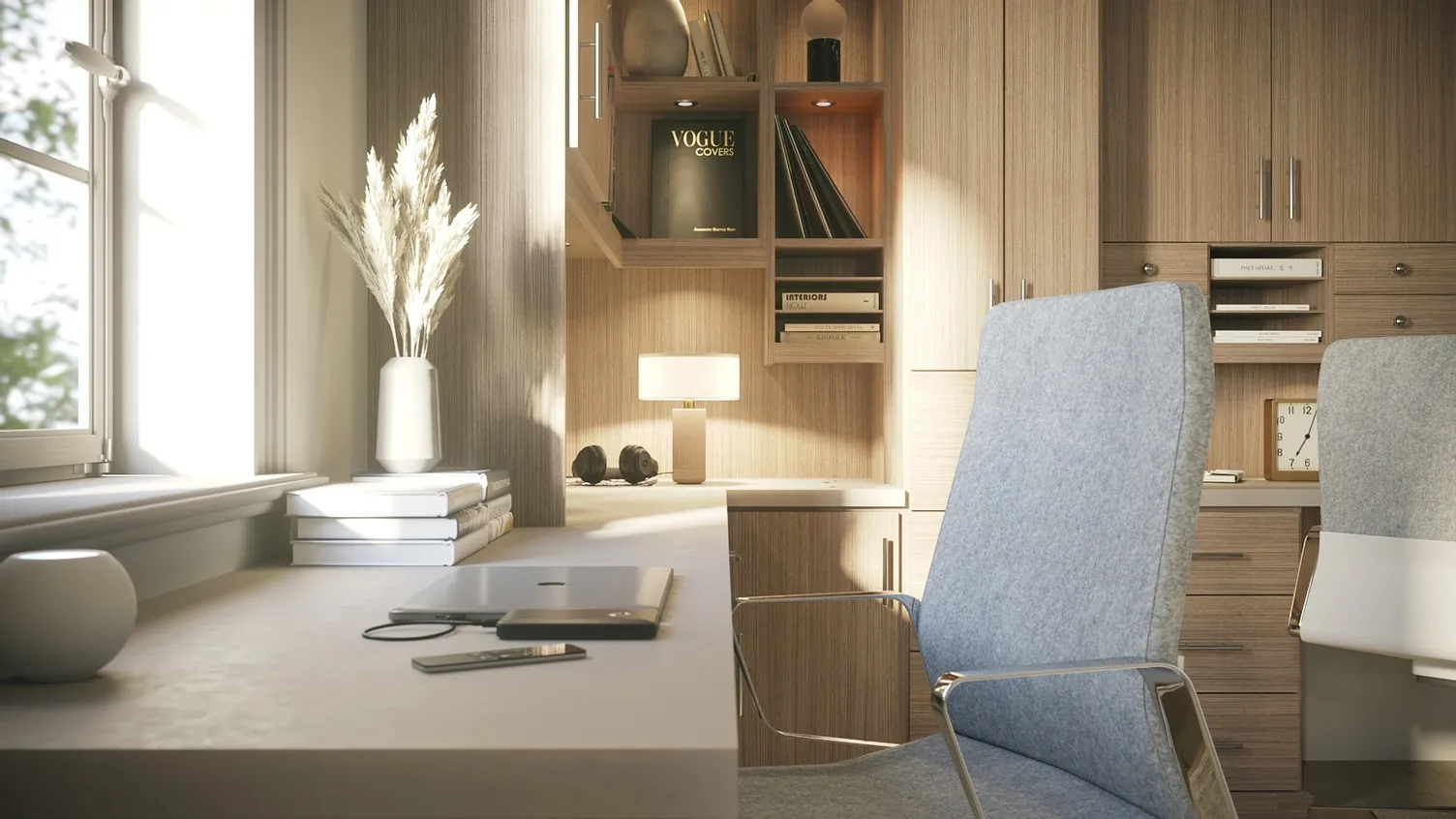
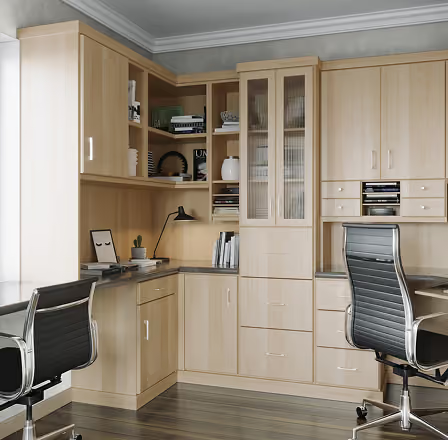
If your office has upper cabinets or shelves above the desk, under-cabinet LED strips light the work surface evenly with no fixture in view. The light lands where your hands and papers are and fills in the shadow the cabinets cast.
Wall Sconces
Sconces provide accent and fill light without taking up desk or floor space. Mounted on either side of a window or a built-in cabinet, they soften the shadows an overhead fixture leaves on your face. Swing-arm sconces can double as task lighting in a narrow office.
Floor Lamp
A floor lamp fills a dark corner, lights a reading chair, or serves as the main ambient source in a rented office where you cannot change the ceiling fixture. An arc lamp can reach over a crowded desk.
Chandelier
A chandelier gives a home office a focal point and spreads ambient light across the room. Hang it over the center of the room or a seating area rather than over a monitor, where it can reflect in the screen, and put it on a dimmer.
Lighting for Video Calls
For video calls, the main light should be soft, diffused and in front of you, slightly above eye level, and never behind you. A window or bright lamp behind your chair can turn you into a silhouette, because the camera adjusts its exposure to the brightest part of the frame.
Set your desk so a window is to the side or in front of you. Add a small lamp behind the monitor, aimed at your face, and turn the overhead light down so it does not cast shadows under your eyes. If a window must sit behind you, use a room-darkening shade.
Working With Daylight and Glare
Daylight is pleasant to work in, but it changes through the day and the year. Strong direct sun can wash out a screen, and a west-facing window brings low afternoon sun across the desk while many people are still working. In winter, daylight fades earlier, so the electric lighting has to carry more of the day.
Sheer or light-filtering shades keep the daylight while cutting the glare. Position the desk perpendicular to the window rather than facing it or backing onto it, so light falls across the desk instead of onto the screen or behind you on camera, and keep the ambient and task layers on dimmers or separate switches so you can add light as the daylight drops.
How Built-In Cabinetry Changes the Lighting Plan
Built-in office cabinetry changes where light is needed and where fixtures can go, so plan the two together. Work through it in this order:
- Cabinet depth. The deeper the upper cabinets or shelves above the desk, the more of the work surface sits in their shade.
- The shadow line. A ceiling light behind you throws the cabinets' shadow forward onto the desk, so the area beneath the uppers usually needs its own light.
- Under-cabinet lighting. A slim LED strip mounted beneath the uppers lights the work surface evenly with no fixture in view.
- Wiring and switch location. Decide where the power comes from and where the switch sits, at the desk or by the door, before the cabinets go in, so cords and switches aren't left exposed or out of reach.
- Integrated lighting. Lighting built into shelves and cabinets, rather than added afterward, keeps the light sources hidden and gives open shelving a natural accent layer.
Closet World's custom home office built-ins are one example of planning these pieces together. Its home office page lists built-in desks, upper cabinets, shelving, floating shelves and cord management, with lighting among the available features. For the rest of the room, see this guide to home office organization with built-in storage.
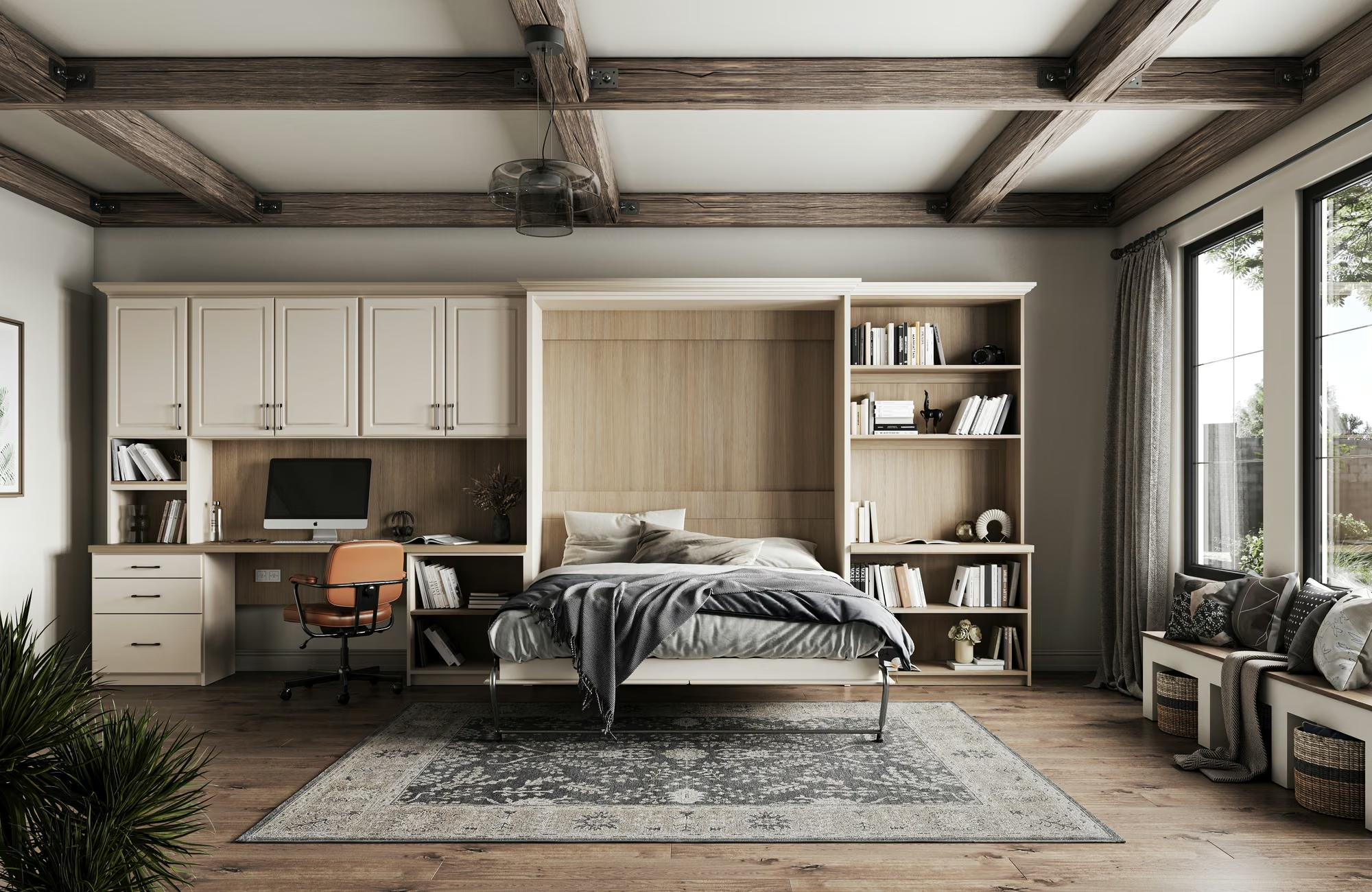
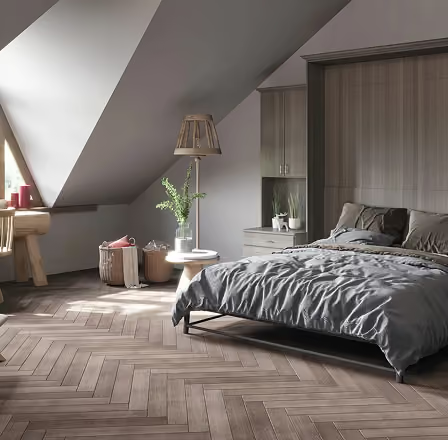
An office that doubles as a guest room needs bright, focused light for work and a softer layer for guests. Closet World's home office page shows its Prestige Office workspace paired with a BedTec wall bed that stays tucked away behind doors during office hours; the office and wall bed combination page covers that setup.
Home Office Design Styles
Your lighting should match the room's style, because the fixtures are visible all day.
Modern
Modern offices favor clean lines and hidden sources: recessed ceiling lights, slim LED desk lamps, and linear under-cabinet strips in black, white or brushed metal.
Farmhouse
Farmhouse lighting leans on warm materials: a lantern-style semi-flush fixture, a wood or wrought-iron desk lamp, and sconces with fabric or seeded-glass shades.
Cottage
Cottage style uses softer, smaller-scale fixtures: a petite chandelier, ceramic or glass table lamps, and painted sconces layered at different heights.
Minimalist and Scandinavian
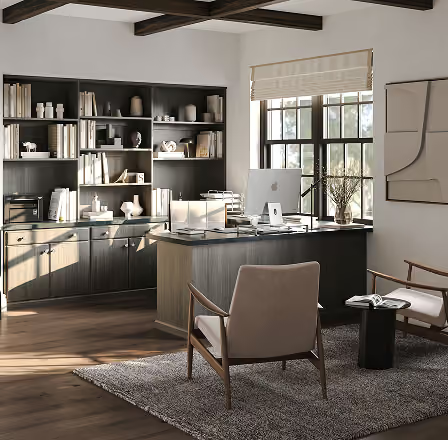
Minimalist and Scandinavian offices rely on daylight first, then simple fixtures with pale finishes: a plain pendant, a light-wood desk lamp, and uncluttered recessed lights. Pale walls and cabinetry bounce light around the room.
Industrial
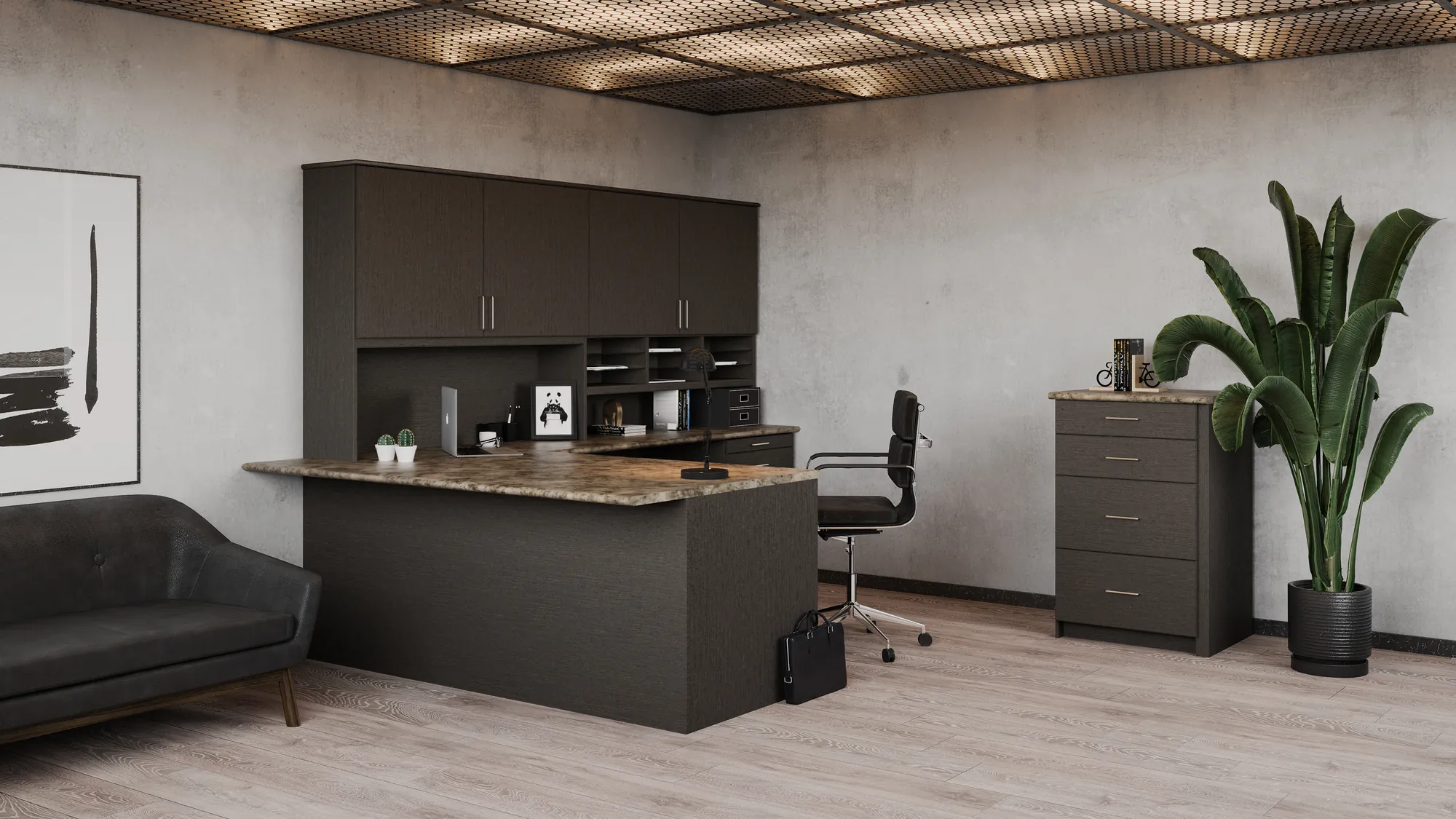
Industrial lighting shows its hardware: exposed-bulb pendants, metal cage fixtures, articulating task lamps and pipe-style sconces. Pair these with dimmers, since exposed bulbs can cause glare on a screen.
Which home office lighting should you choose?
Match the fixture to the job:
- Best ceiling light for low ceilings: a flush mount with a diffused shade.
- Best for softer overhead light: a semi-flush mount, which bounces light up as well as down.
- Best minimalist option: recessed lights, ideally on a dimmer.
- Best over a worktable: a pendant, kept out of the sightline to screens.
- Best simple task light: an adjustable desk lamp on the side opposite your writing hand.
- Best for built-in cabinetry: under-cabinet LED lighting over the work surface.
- Best for video calls: soft, diffused light in front of you, slightly above eye level.
- Best for a small office: a flush mount plus wall-mounted or under-shelf task lighting that keeps the desk clear.
Frequently asked questions
What type of ceiling light is best for a home office?
A diffused flush or semi-flush fixture suits most home offices because it spreads even light with little glare. Recessed lights suit larger or minimalist offices, and a pendant works over a worktable. Keep any fixture away from directly above the monitor.
Where should a desk lamp be placed?
On the side opposite your writing hand, with the head adjusted to light the work surface rather than the screen. This keeps your hand from shadowing your work and keeps reflections off the monitor.
How do you light a home office for video calls?
Face a soft, diffused light placed in front of you and slightly above eye level, and keep windows and bright lamps out of the background. A small lamp behind the monitor or a window to one side works well.
Should a home office have overhead lighting?
Yes. An overhead light sets the room's base brightness so the screen isn't the brightest thing in the room, a contrast many people find uncomfortable over a long day. Pair it with a task light on a separate control.
How do you light a small home office?
Use a flush or semi-flush ceiling light for even ambient light, then add task lighting that doesn't take desk space, such as a swing-arm wall sconce, a clamp-on lamp or under-shelf lighting. Pale walls and cabinetry help the light go further.
Does built-in cabinetry need its own lighting?
Usually. Upper cabinets shade the desk below them, so under-cabinet lighting is the simplest way to light the work surface. Plan the wiring and switch location with the cabinetry so the lights don't have to be added afterward.
Ready to organize your home office? Get a free in-home design consultation.
A Closet World designer can plan built-in desks, cabinets and shelving around the way you work, with lighting considered from the start. Schedule a free in-home design consultation.