








Originally published June 17, 2024 · Updated October 2026
The best way to add storage to an entryway is to give every item that comes through the door a fixed home: hooks for bags and jackets, shoe storage at floor level, a tray or drawer for keys and mail, and a bench or closet for larger gear. In many California homes, the entryway or garage-side door also has to do the work of a mudroom, handling bikes, boards, beach bags and sandy shoes.
Key Takeaways
- Work from the wall down: hooks, shelves and racks on the walls, shoe storage and a bench at floor level, and one tray or drawer for keys and mail.
- Sort what comes through the door by how often you use it: at hand, nearby, hidden or bulk, and elsewhere, such as bikes and boards in the garage.
- Combine two or three ideas rather than all twelve. A hook rail, shoe storage and a key tray cover the basics in most entries.
- An entry closet with a single rod and a shelf can become a drop zone with hooks, shelves, shoe storage and drawers that keeps bulk gear behind a door.
What is the best way to add storage to an entryway?
The best way to add storage to an entryway is to work from the wall down. Vertical surfaces hold hooks, shelves and racks that keep the floor clear. Floor level holds shoe storage and a bench. One tray or drawer catches keys and mail. If the entry has a closet, convert it into a drop zone with shelves, hooks and shoe storage. If not, a wall of hooks and cubbies does the same job.
Determine Your Entryway Needs
Before buying anything, list what arrives at your door on a normal day and what leaves with you in the morning. For most households that is shoes, bags, keys, mail, a jacket or two, and the week's sports and beach gear. Storage that ignores those items ends up with them on the floor beside it.
Sort what you store by how often you use it
Then sort those items by how often you reach for them. Each group needs a different kind of storage:
- At hand: keys, shoes, bags, jackets and sunglasses. Hooks, a tray and open shoe storage right by the door.
- Nearby: helmets, sports equipment and backpacks. Cubbies, baskets or a storage bench a step or two away.
- Hidden or bulk: seasonal gear, overflow shoes and things you rarely use. A closet, a cabinet with doors, or lidded bins on high shelves.
- Elsewhere: bikes, boards and oversized equipment when they make the entry hard to use. The garage or the garage-side entry.
Most of the ideas below serve one of these groups, so the sorting tells you which ones you need.
Assess the size and shape of the space
Measure the wall space beside the door, the depth available before you block the walkway, and where the door swings. A narrow hallway can take only wall-mounted storage; a wider foyer can take a bench and a console. An entry with a closet should start there, because it already has depth and a door.
12 Entryway Storage Ideas
Combine two or three of these ideas rather than all of them; a hook rail, shoe storage and a key tray cover the basics in most entries.
1. Bench with storage
A bench gives you a place to sit while putting on shoes and hides shoes or bags beneath the seat. Choose a lift-up lid to hide things or open cubbies to see them.
2. Console table with drawers
A slim console holds a tray and a lamp on top and keeps mail, chargers, sunscreen and leashes in its drawers. Its narrow depth suits hallways where a bench would block the path.
3. Hooks, pegs and racks
A rail of hooks at adult height, with a lower rail for children, handles jackets, bags, hats and helmets. Hooks are often the simplest upgrade because they take almost no effort to use.
4. Floating shelves or cubbies
Shelves above the hooks hold baskets for gloves and sunglasses. Open cubbies give each person a labeled slot for their own gear.
5. Baskets and bins
Baskets on shelves or under a bench corral loose items by person or category. Use one per family member and keep the number small.
6. Clear bins for rotating items
Clear, lidded bins on a high shelf hold items that cycle in and out of use: beach towels, hiking layers, kids' uniforms. Clear sides mean no one opens three bins to find one.
7. Dividers for keys and mail
A wall-mounted sorter or a drawer with dividers separates incoming mail, outgoing mail and keys, so paper stops spreading across the nearest flat surface.
8. Trays for small items
A single tray by the door collects keys, wallets, earbuds and loose change. If it fills up, the tray is doing its job and needs a regular sort.
9. Shoe cubbies or shoe shelves
Dedicated shoe storage at floor level stops the pile. Open cubbies keep everyday pairs easy to grab, and angled shelves keep every pair visible; this guide to shoe cubby storage types compares the options.
10. Cabinet with doors
A tall cabinet or shoe cabinet with doors hides overflow shoes, seasonal gear and bulk items while keeping them near the door. It suits entries where open storage would look cluttered.
11. Closet drop zone
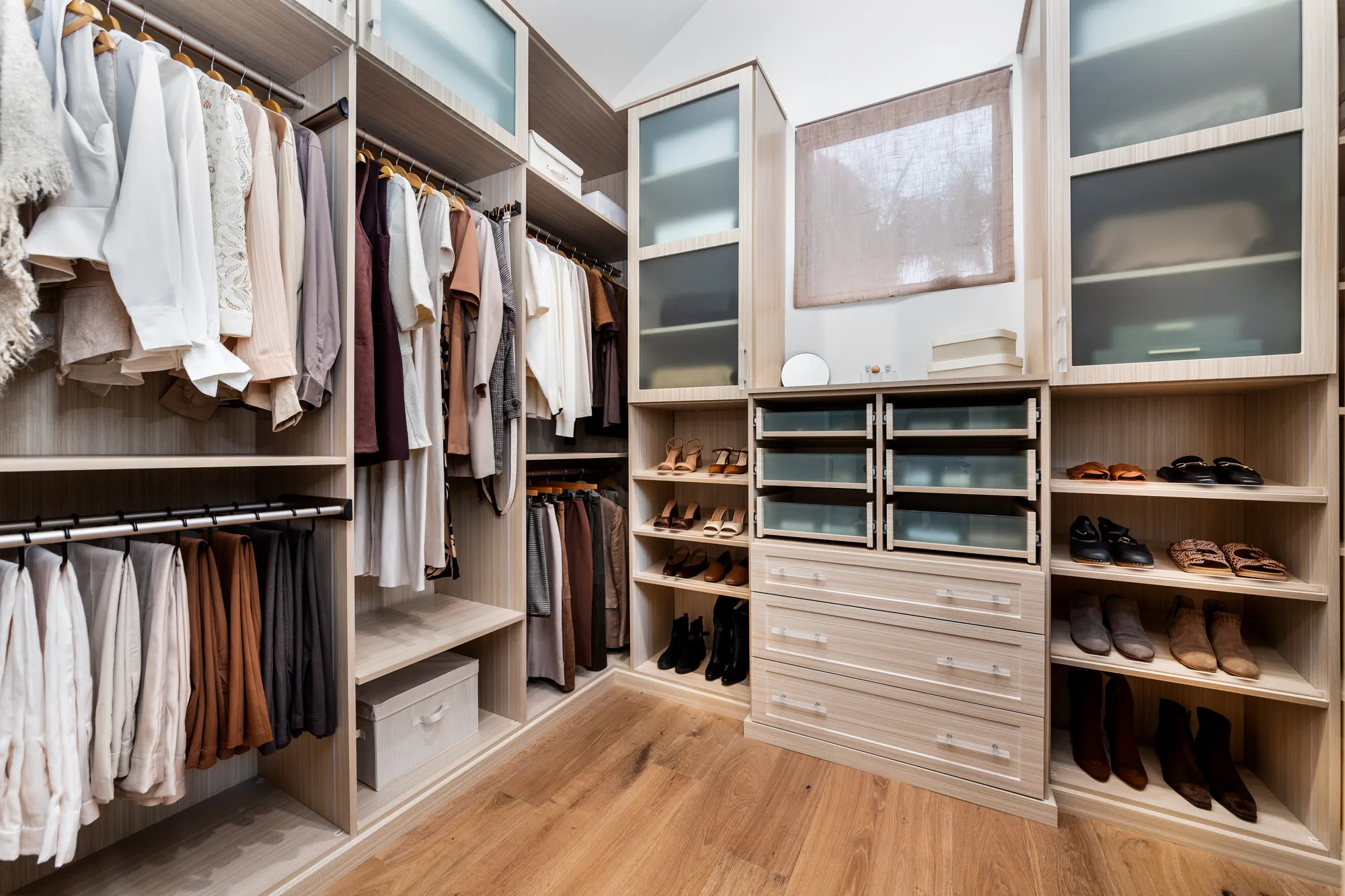
If the entry has a closet with a single rod and a shelf, replace them with hooks, shelves, shoe storage and drawers. The closet keeps bulk gear behind a door, and the hooks inside handle what you grab on the way out.
12. Bike and board racks
A vertical bike hook or a horizontal board rack lifts the largest items off the floor. Mount racks securely into studs and position them so the gear clears the door swing.
Make Storage Feel Intentional
Once the storage works, a few finishing touches make the entry feel like part of the home rather than a holding area. A plant on a shelf or the floor softens a wall of hooks and bins, and art or photos above the hook rail draw the eye upward, away from shoes and bags.
Entryway Closet vs. Open Storage
An entryway closet hides clutter behind a door, but it is often a single rod and a shelf, which leaves much of its depth unused. Open storage keeps everything easy to reach, but everything stays visible. Most entries work best with both: a closet drop zone for bulk gear, and a hook rail and tray by the door for what you need next.
| Option | Strength | Weakness | Best for |
|---|---|---|---|
| Entryway closet | Hides clutter and uses existing depth | Often inefficiently configured | Homes with an existing closet |
| Open wall storage | Easy to access and works in narrow halls | Everything remains visible | Small entries and daily items |
| Both combined | Hides bulk gear while keeping daily items accessible | Requires both types of space | Most family homes |
Entryway Storage for California's Outdoor Lifestyle
For many California households, the entry is where outdoor life meets the house. Outdoor activity runs much of the year, so the gear that comes through the door is rarely packed away for a season, and there is often no dedicated mudroom to take it.
That gear tends to be large and specific: bikes, surfboards and paddleboards, hiking boots, beach bags, wetsuits, kids' sports equipment, and a steady flow of sandals and running shoes. With indoor-outdoor living, the mess at the door is often sand, dust and sunscreen.
Plan the entry for that. Put a hard-surface, wipe-down zone at the door for sandy shoes and wet gear. Use wall racks for bikes and boards so they do not block the hallway. Give beach and trail gear its own labeled bins, and keep sunscreen, hats and sunglasses in a tray at hand height. The largest items may belong at the garage-side entry; Closet World's garage storage systems cover that door, and its mudroom storage page shows custom mudroom cabinets for shoes, bags and coats.
An Emergency-Ready Shelf for Wildfire Season
In fire-prone parts of California, the entryway is a natural place for an emergency-ready shelf or bin, so the things you would want in an evacuation are together by the door. Households often keep items such as copies of important documents, medications, phone chargers, a flashlight, pet leashes and a change of clothes there. Keep it packed, labeled and reachable without moving anything else, and check it when the seasons change.
For a complete list, follow official guidance such as CAL FIRE's Ready for Wildfire evacuation guide or the emergency kit checklist at Ready.gov, and adapt it to your household.
When to Go Custom
Freestanding furniture works when the entry has enough width and your storage needs are simple. Custom storage becomes more useful when every inch matters, the closet has awkward dimensions, or several types of storage need to coexist, such as hooks above shoe storage, drawers beside a bench, and shelves sized for specific bins.
Closet World's custom entryway closets are one example. The product page describes hanging space, drawers, shelves, hooks and built-in drop zones, with custom shoe shelves, pull-out shoe storage, catch-all drawers, bins and trays as options and lighting among the listed features, and says its entryway closets are especially useful in smaller spaces. Its FAQ notes that many custom spaces can be completed in as little as 9 to 14 days, depending on the scope of the project and the features selected.
Frequently asked questions
How do you add storage to a small entryway?
Use the walls. A hook rail, a floating shelf with baskets, and a slim wall-mounted shoe rack take almost no floor space. A tray on the shelf handles keys and mail.
What should be stored in an entryway?
Mainly what comes in and goes out with you: shoes, bags, jackets, keys, mail, sunglasses and this week's gear. Seasonal and bulk items can go behind a closet door or on high shelves, and oversized gear such as bikes and boards often belongs in the garage.
What is an entryway drop zone?
A drop zone is a dedicated spot by the door where everything you carry in lands: hooks for bags and jackets, a tray or drawer for keys and mail, and shoe storage below. It can be an open wall or a converted closet.
What can you use instead of a mudroom?
An entryway or garage-side door can do a mudroom's job with a wipe-down floor zone, hooks, shoe storage, a bench and bins for outdoor gear. That is how many California homes without a dedicated mudroom cover the function.
Where should bikes and surfboards be stored?
On wall-mounted racks, in the entryway or the garage, so they stay off the floor and out of walkways. Mount racks into studs, clear of the door swing, and keep boards out of direct sun.
Is an entryway closet worth converting to a drop zone?
Yes, if it currently holds a rod and a shelf. Replacing the rod with hooks, shelves, shoe storage and drawers uses the closet's full depth and keeps the mess behind a door.
Ready to organize your entryway? Get a free in-home design consultation.
A Closet World designer can measure your entry, review what comes through your door, and design a drop zone built for it. Schedule a free in-home design consultation.