










It’s 2:40 a.m. Baby had an incident. You are standing in front of the closet in the dark, holding a flashlight in your teeth, trying to determine whether the sleeper in your hand is a 3-month or a 6-month, because the tag has been washed into abstract art and the baby is providing a soundtrack of screams.
Meanwhile the closet contains: four sizes at once, a gift bag of clothes for a two-year-old (the baby is four months old), one newborn onesie that keeps sneaking back into rotation like it doesn’t know the era is over, and a hamper situation. Nobody warned you that the smallest person in the house would generate the most complicated wardrobe.
Here’s the secret that fixes most of it: organize by size, not season. A baby moves through five or six clothing sizes in the first year alone, so the closet’s real job isn’t storing clothes. It’s managing a pipeline: what fits now, what’s up next, and what got outgrown sometime between Tuesday and Thursday.
How Do You Organize Baby Clothes by Size?
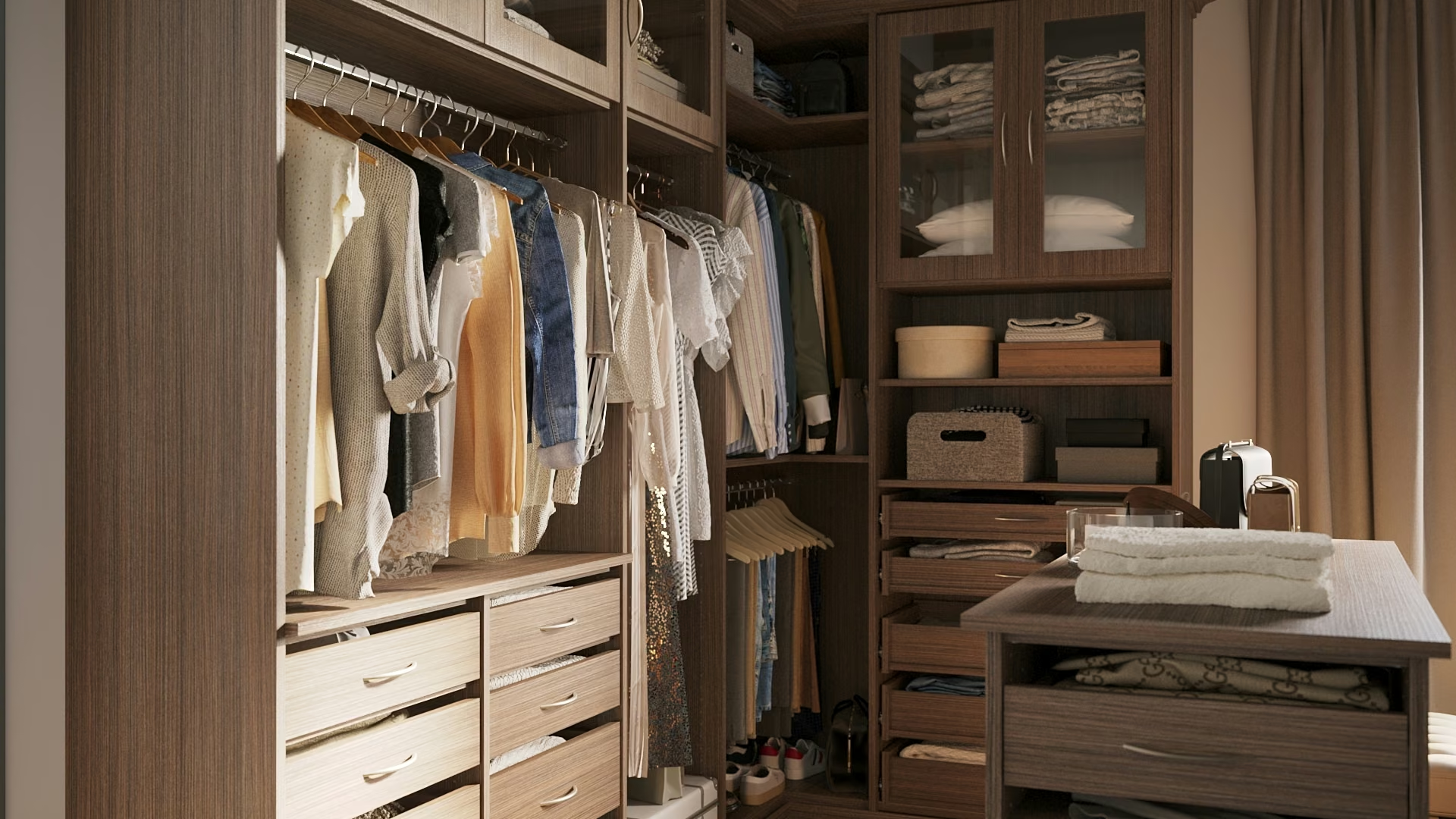
Hang everything in size order, left to right, with closet dividers marking each size (newborn, 0-3M, 3-6M, and so on), current size at the front of the reachable section and the next size staged right behind it. When the 2 a.m. outfit change happens, and it will, whoever’s on duty can find a sleeper that fits without turning on the big light or their critical thinking.
- Size dividers on the rod. The thirty-second habit that ends the “why is this newborn onesie still in rotation” mystery. The onesie had a good run. The onesie needs to accept it.
- Next size staged, not stored. Keep one size ahead within arm’s reach. Growth spurts do not send a calendar invite; they just show up one morning when nothing snaps.
- An outgrown bin on the closet floor. Too-small items go straight into the bin as they come off, not back on the rod to fake you out tomorrow.

What do you do with clothes the baby has outgrown?
Keep one labeled bin in the closet and empty it monthly into three destinations: save (bagged and labeled by size, for a possible future sibling), donate, and keepsake (one small box, and yes, the hospital hat makes the cut).
The monthly rhythm matters more than the sorting system, because outgrown clothes multiply quietly, and a onesie avalanche is cuter in theory than in actuality, especially when it happens at 2 a.m.
Use the Double Hang: Baby Clothes Are Comically Small
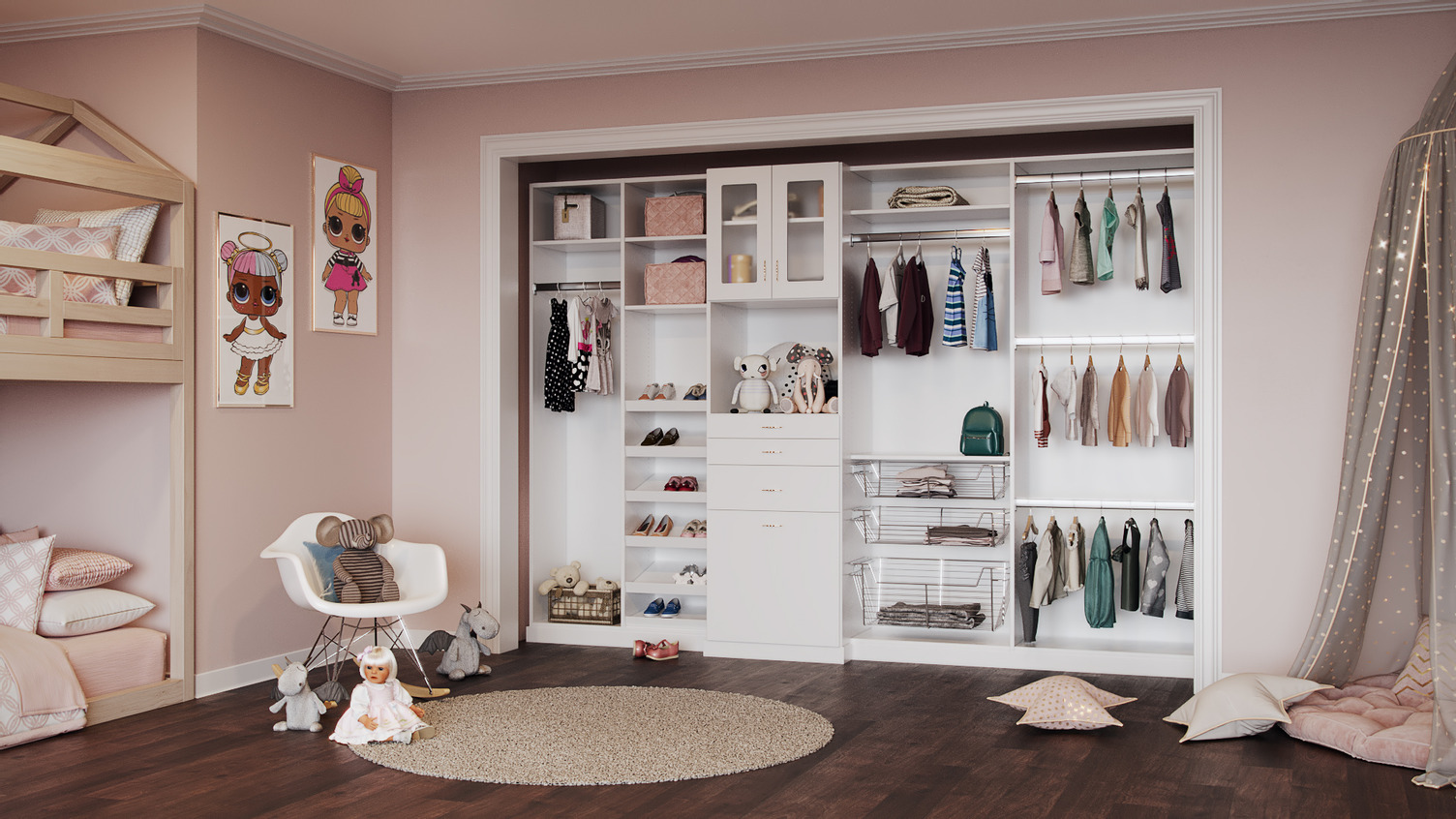
Baby clothes are the shortest hanging items in the house, which makes a baby closet the easiest closet in the home to double or triple in capacity. Two or three rods stacked in one section turn a single builder closet into a full wardrobe system with room left over. Reserve the lowest rod for the current size: in a couple of years that’s the rod a toddler can reach, and “I picked it myself” is a milestone worth designing for, even during the six months when “it” is a swimsuit and rain boots.
Make the Closet Do Dresser Duty
Nursery floor space is precious, and a crib plus glider plus changing table doesn’t leave much. Build the dresser’s job into the closet instead:
- Shallow drawers for the fold-and-stuff categories. Onesies, sleepers, and socks, ideally with dividers, because tiny clothes in one deep drawer merge into a single organism by week two.
- Open bins for the daily-grab items. Burp cloths, swaddles, and bibs in labeled bins at adult-arm height, restockable one-handed, which is the only kind of handed you’ll be for a while.
- A changing-supply shelf. Diapers, wipes, and creams stocked at standing height, so restocking the changing station is a ten-second errand instead of a supply run.
- High shelves for the someday stuff. Keepsakes, the next car seat, and that gift bag of two-year-old clothes, which will fit approximately fifteen minutes from now.

Safety, Quickly, Because You Have Nine Other Tabs Open
Anything a future climber could pull down gets anchored into studs, and anything mouth-sized lives above the future reach line. The CPSC’s Anchor It campaign covers furniture tip-over prevention in detail, and a closet designed for a nursery bakes it in from the start: secured systems, drawers low, hazards high. Five minutes of planning now beats one very bad afternoon in eighteen months.
Nursery Closet Ideas Beyond the Clothes
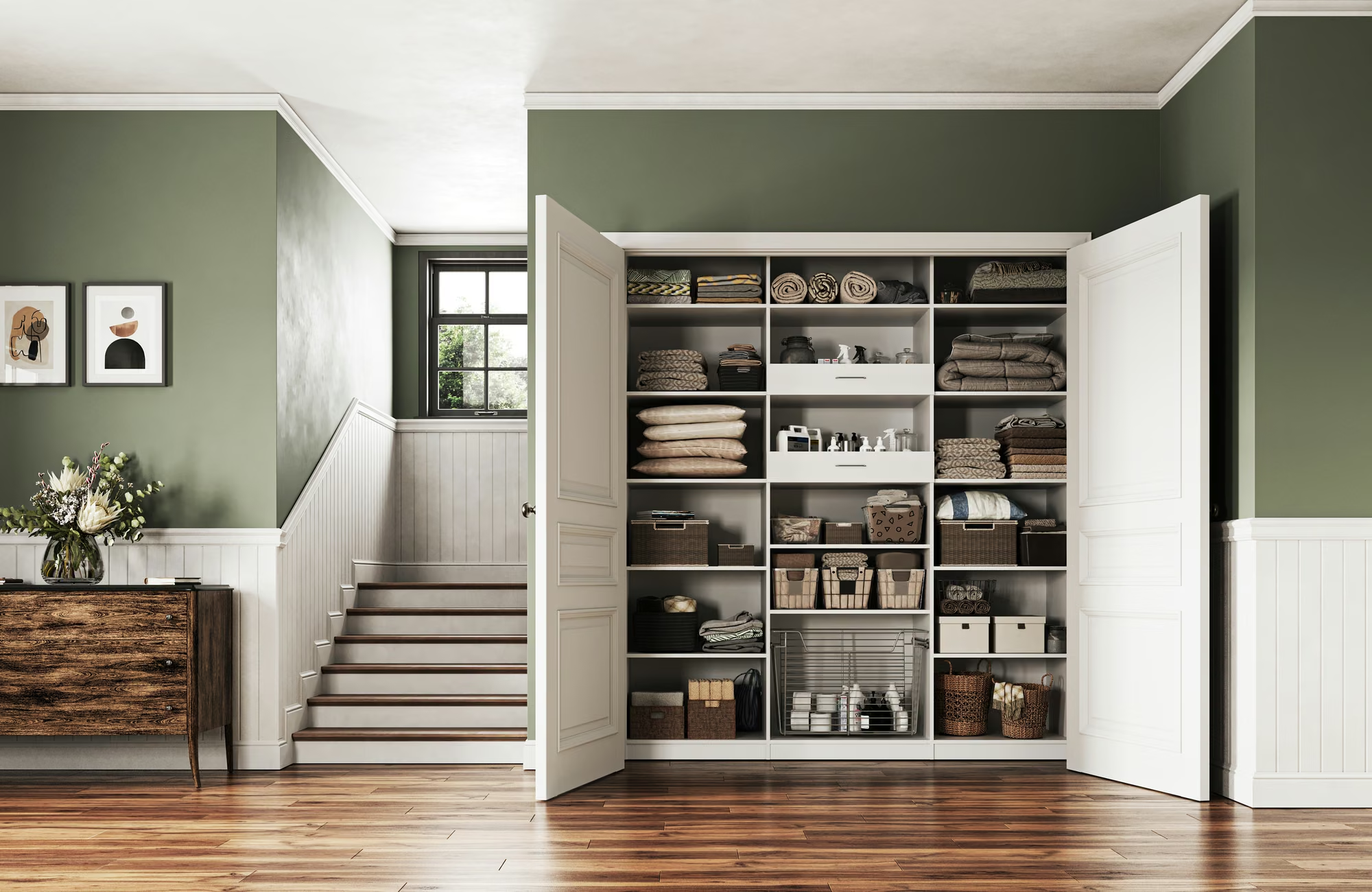
Nursery closet organization covers a whole department store, only some of which is apparel. The closet also has to run inventory on diapers (by size, which changes on the same schedule as everything else), blankets and swaddles, the medicine and grooming kit, toys on rotation. There’s also the equipment shelf: the carrier, the diaper bag, and the travel crib with case, which folds up smaller than seems legal and unfolds like an argument.
Give each category its own labeled zone at the right height: medicine high, diapers at changing height, toys where a future toddler can reach the approved ones and can’t reach the aspirational ones.
- Diaper staging by size. Current size at arm’s reach, next size stacked behind, and outgrown sizes into the donation bag; unopened boxes of too-small diapers are the nursery’s most commonly donated item, which tells you how fast this changes.
- A rotation shelf for toys and books. Half out, half resting in the closet. Swapping monthly makes old toys new again, a magic trick that costs nothing and buys you a quiet twenty minutes.
- One “go bag” hook. The stocked diaper bag hangs ready by category (change, feed, distract), because leaving the house with a baby is a mission with a launch window.
Baby Clothes Storage for the Sizes That Aren’t Now
The clothes the baby isn’t currently wearing outnumber the clothes they are, in both directions. For baby clothes storage that keeps the pipeline honest: next sizes up stay in the closet on the staging rod or a labeled eye-level bin (gifts included, even the two-year-old outfit, especially the two-year-old outfit).
Outgrown clothes headed for a future sibling get washed, bagged by size in clear zip bags, and stored up high or under the crib in low bins, labeled on the outside because “mystery bag of tiny clothes” is not a filing system, it’s a memory test you will fail. Keepsakes get one box with a hard lid and a soft limit, and the hospital hat goes in first, as is tradition.
Quick Answer: What’s the Best Baby Closet Setup?
Size-ordered hanging with dividers, double (or triple) rods, drawers and bins built into the closet so it replaces the dresser, one outgrown bin on the floor, and adjustable everything, because the whole arrangement will need to change in about eight months. The best baby closet is one you reconfigure, not replace.
That last part is the real argument for a custom closet system in a nursery: adjustable rods and shelves reposition as the baby becomes a kid, so the same closet that held newborn sleepers eventually holds soccer gear and strong opinions on music and denim styles.
We’ve designed closets for every stage of life in California homes since 1991, and nurseries are where the “grows with you” promise works hardest. When the rest of the bedroom needs the same rescue, our bedroom organization ideas guide is the companion piece.
Book your FREE in-home design consultation before the next growth spurt beats you to it. The newborn onesie goes in the keepsake box with full honors. The 2:40 a.m. shift gets a closet that works in the dark.